
 Business Automation
CRM Automation and Follow-Up for Sales Teams in Uzbekistan
A practical guide for Uzbek sales teams: how to eliminate manual entry, stop losing leads, and build automated follow-up...
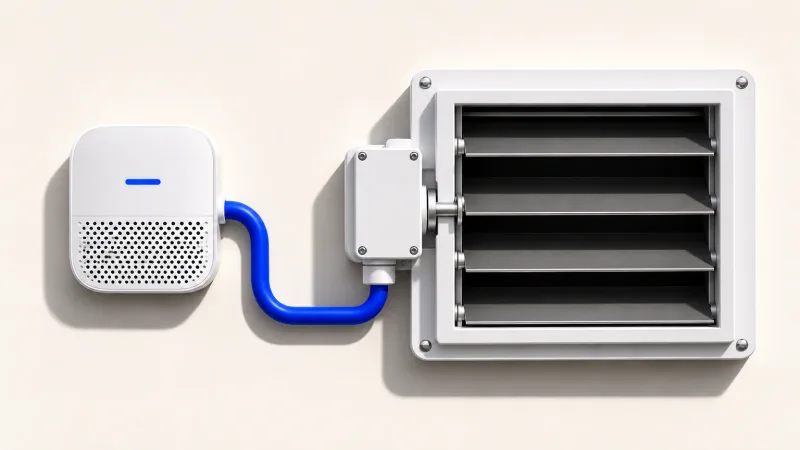
Air quality monitoring in Tashkent requires more than an AQI display on the wall. Our recommendation is to connect PM2.5, PM10, CO2, and VOC sensors to a real-time dashboard, Telegram alerts, and predefined action rules.
This is not just about employee comfort. Reports published in November 2026 said Uzbekistan was considering a mechanism to restrict transport, construction, and certain manufacturing activities during periods of severe pollution. That means measurement data may be useful not only for office ventilation but also for planning logistics, shifts, and outdoor work.
On 27 November 2026, UzNews.uz reported on a draft government resolution prepared by the National Committee for Ecology and Climate Change. The draft proposed a mechanism for temporarily restricting vehicle traffic and construction work, as well as suspending certain industrial activities, when air quality deteriorates.
A report published the same day by Vzglyad.uz outlined several options: reducing truck and passenger vehicle traffic, temporarily halting construction, banning the use of fuel oil, and moving government employees to remote work. These are not permanent requirements. For now, they remain part of a proposed mechanism.
Earlier, on 24 November 2026, Repost.uz covered another "Car-Free Day" campaign applying to official vehicles used by government organizations. No mandatory requirements or measured results were provided for private businesses. But the direction is clear: decisions related to air pollution could affect a company’s delivery schedules, construction plans, and employee work arrangements.
AQI shows the overall condition of outdoor air, but a single index is not enough to manage business operations. Managers need to see which pollutant has increased and where the problem has occurred. The system should also indicate what to do next.
PM2.5 and PM10 sensors estimate airborne particles by measuring how light scatters inside an optical chamber. A CO2 sensor typically measures the absorption of infrared light. This reading helps assess room occupancy and whether air exchange is sufficient. A VOC sensor produces an electrical response to volatile compounds released by paint, cleaning products, furniture, or manufacturing processes.
Office air quality monitoring should track CO2, particulate matter, VOC, temperature, and humidity together. In a warehouse, kitchen, workshop, or construction site, the sensor setup should be selected according to the work being performed. For example, particulate matter will be the priority in a warehouse exposed to street dust. In a newly renovated office, VOC levels should be monitored separately.
Many projects focus on sensor prices but overlook data reliability. If a device is installed in the wrong place, becomes clogged with dust, or is not checked on time, the dashboard can lead to the wrong decision. Placing a sensor next to a window or directly in the airflow from an air conditioner is also a mistake. One device for an entire building is not enough either.
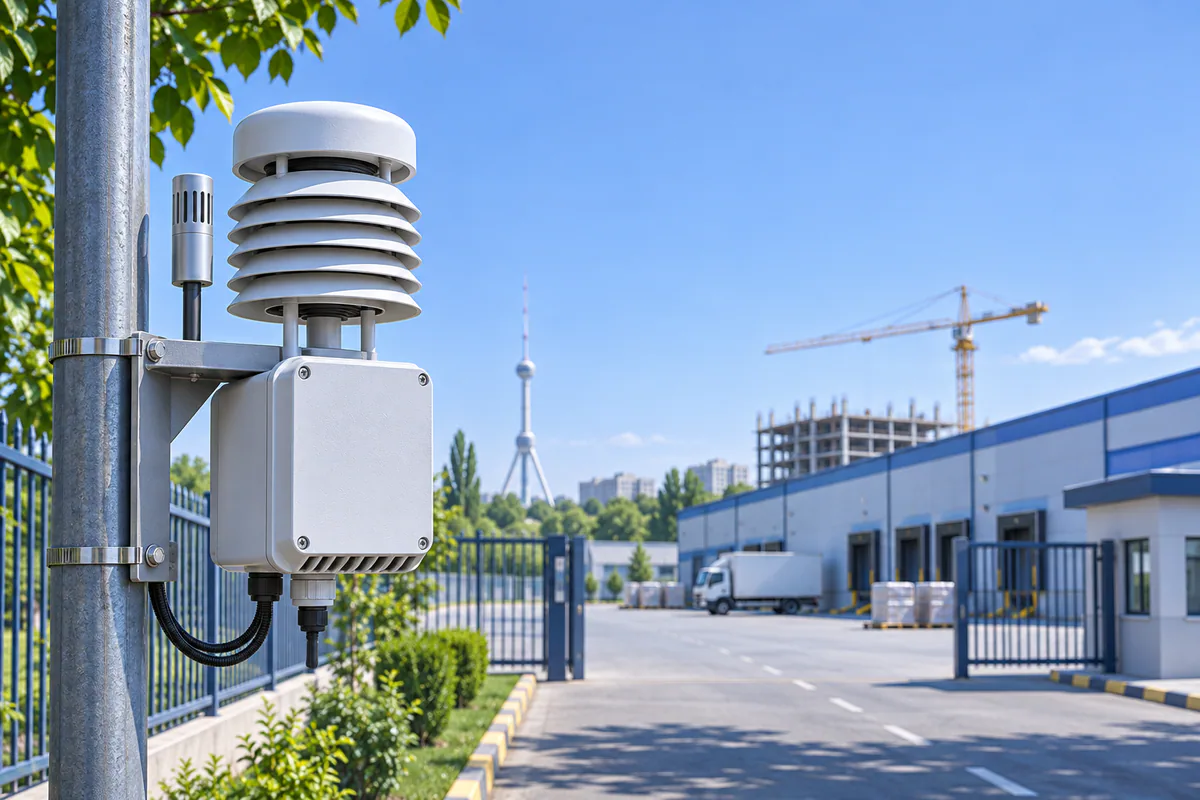
Start automated air quality monitoring with a decision matrix, not a sensor purchase. Assign someone responsible for each zone. Define in advance when ventilation should be increased, when work should be temporarily adjusted, and when a technician should be called.
In a real-time system, the sensor sends readings to a server over the local network or the internet. The software compares each value against predefined thresholds and checks for sudden spikes. If the condition persists, the responsible employee receives a Telegram message. A message that merely says "air quality is poor" is useless.
Practical message template: "[Indicator] in [zone name] has exceeded the defined threshold. The condition has persisted for [duration]. Recommended action: [check ventilation / stop work / call a technician]. Responsible person: [job title]." This kind of message explains the situation and makes the expected action clear.
The most dangerous mistake in HVAC integration is automatically opening an outside-air damper without checking outdoor conditions. If particulate levels outside are high, increasing ventilation can make indoor air even worse. We recommend comparing indoor and outdoor sensors. If CO2 rises, the system increases air exchange. If outdoor PM rises, the system switches to filtration mode.
At a minimum, the system log should record the zone, time, sensor status, PM2.5, PM10, CO2, VOC, alert type, and action taken. This gives managers more than a chart. They can also see how long the problem lasted and who responded to it.
There is no single market price for such a system in Tashkent. The calculation is straightforward: sensors and networking + management dashboard + Telegram alerts + HVAC integration + calibration and maintenance. If a proposal lists only the cost of the devices, it is not a complete estimate.
If the company has neither an employee responsible for responding to alerts nor a defined action rule, do not rush into complex automation. Start with a pilot in one monitoring zone using a reliable sensor, a simple dashboard, and a designated person. Otherwise, the system will become just another screen that nobody looks at.
Before selecting an air quality sensor manufacturer, Celion recommends mapping the building’s zones, existing internet network, HVAC controls, and alert scenarios. The sensors’ APIs or gateways can then be connected to a single dashboard. A Telegram bot assigns tasks, while the system stores a history of completed actions.
We would not start with AI-based forecasting. First, sensor data must arrive consistently, alerts must avoid false alarms, and employees must know what to do. Once enough historical data has been collected, the system can be enhanced to identify recurring pollution periods or anomalies in HVAC operation.
The interface can be built in Uzbek, Russian, or English, depending on the language the team uses. The choice is based on user context, not quality. The standard is simple: when air quality deteriorates, the system should already know who to notify, where the problem is, and what action needs to be taken.
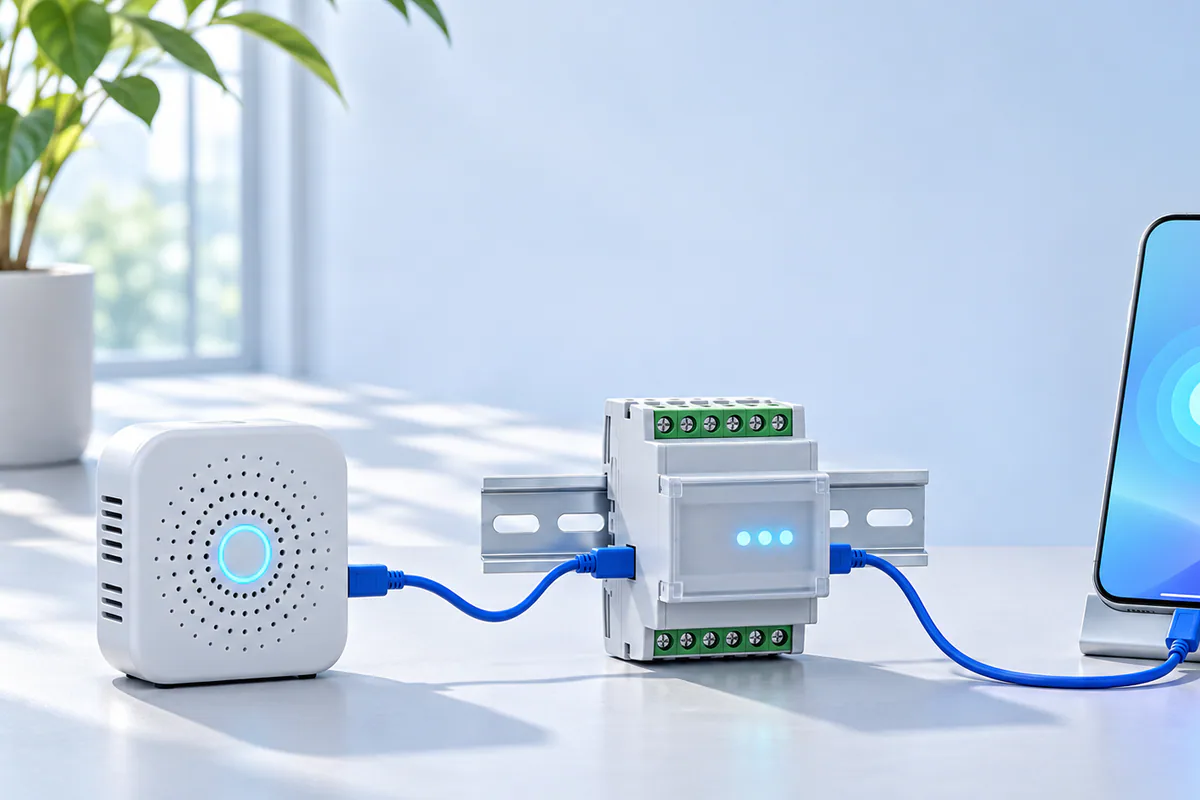
Celion develops custom business air quality monitoring systems, Telegram alerts, and HVAC integrations. To get started, define the building’s zones, list the existing sensors, and identify the three main actions that should follow an alert.
Callback
Leave your details and we will contact you shortly.
Become a Partner
Leave your contact details and we will get back to you shortly.
Order Service
Leave your phone number and we will contact you shortly.