
 AI
What Is AI Implementation for Businesses in Uzbekistan?
AI implementation is not adding a chatbot. It is embedding intelligent agents into real business workflows - lead qualif...

What are AI agents? They are programs that receive a goal and choose the next action on their own. An agent uses tools, checks the result, and adjusts its plan when necessary. A basic chatbot, by contrast, mainly responds to the question it is given.
A new report about DeepMind illustrates this difference well: some AI agents are managing computing resources for experiments related to the next Gemini model. This does not mean Gemini is independently creating itself. Public materials do not disclose the agents' authority, the level of human oversight, or their results. In business, an agent should be designed not as a chat window, but as a controlled workflow.
According to a Habr report dated November 28, 2026, Google DeepMind is allowing AI agents to manage part of its computing capacity and conduct experiments related to the next version of Gemini. Koray Kavukcuoglu, DeepMind's Vice President of Research, linked this approach to strategic changes within the laboratory.
However, the date shown on the page is in the future relative to when this article is being prepared. It would therefore be a mistake to treat the report as a confirmed current event. The source does not say how many resources the agents manage, which actions they perform independently, or how the quality of their experiments is evaluated.
In other words, this does not prove that a fully autonomous laboratory exists. It is a signal that parts of the research cycle may be delegated to agents. AI may select experiment parameters, queue computing tasks, and propose the next test based on the results. Final scientific conclusions and high-risk decisions, however, should remain under human supervision.
You ask a basic chatbot a question and receive an answer. An autonomous AI agent, however, is given a goal, permissions, and clear constraints. It breaks the task into parts, calls the necessary tools, stores intermediate results in memory, and selects the next step.
A research agent's cycle might work like this: form a hypothesis, select experiment parameters, launch a computing task, compare the result against a criterion, and move on to a new hypothesis. This is a general operating model. The public report about DeepMind does not confirm that its internal process follows this exact sequence.
When several agents are involved, the work can be divided into roles. One creates the experiment plan, another carries it out, and a third searches the results for errors or contradictions. A larger number of agents does not guarantee a reliable answer. They may repeat the same false assumption or endorse one another's conclusions without evidence.
That is why verification must be a separate stage. If a result fails to meet a predefined criterion, the agent should not accept it. Any significant conclusion should be checked again using another method. The process should stop if resource limits or permission boundaries are breached. The human scientist's role remains essential: they define the question, the criteria, and the boundary beyond which the agent cannot make decisions independently.
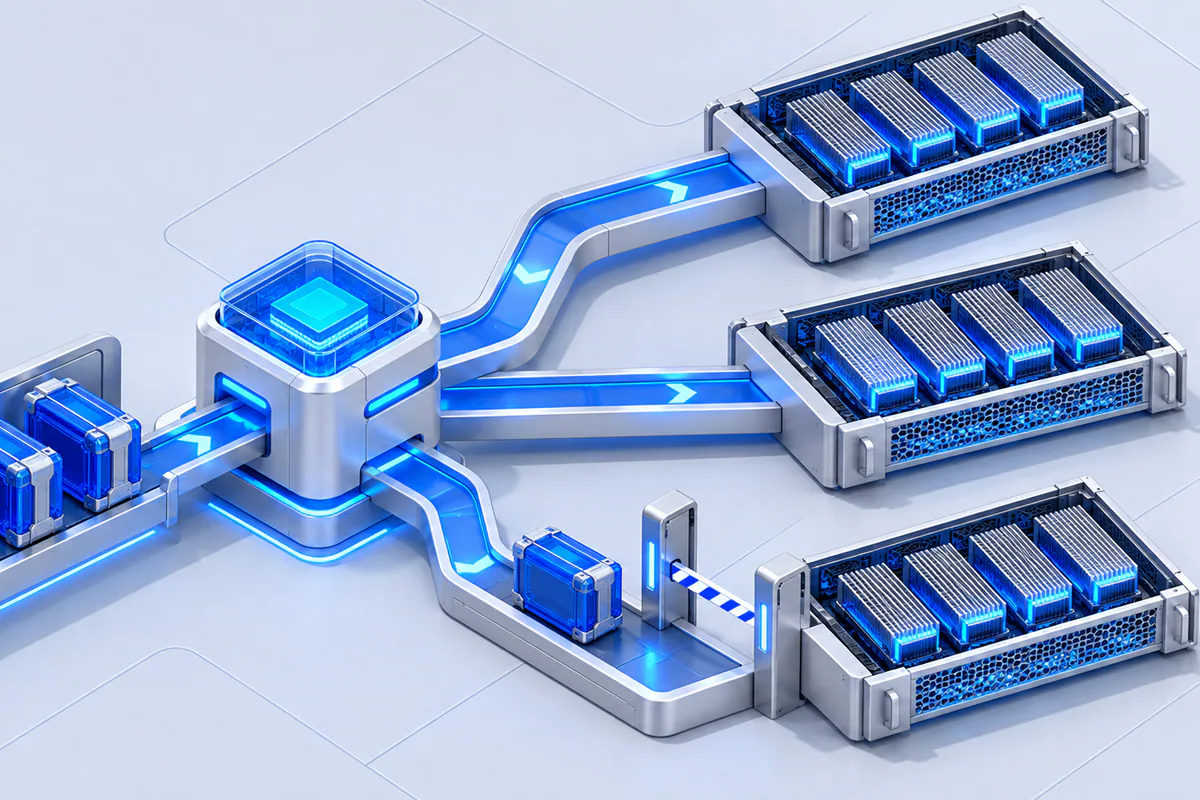
A company in Uzbekistan does not need DeepMind-level computing infrastructure. The principle it needs is simple: do not give the agent a powerful position; give it a clearly bounded process. For example, an agent could match a request from Telegram with a customer in the CRM, check product availability, and prepare a draft response for a manager.
The decision rule for an AI agent development project is straightforward: if an action is easy to reverse, its result is inexpensive to verify, and its permissions can be limited, it can be delegated to an agent. If even one of these conditions is not met, test the agent in assistant mode first.
In addition to model costs, budget for the verification system. Duplicates in the CRM, outdated inventory records in 1C, or incomplete customer details in Telegram can be processed faster with an agent. Mistakes can spread just as quickly. If the data is disorganized, autonomy will not fix it. It will only accelerate the problem.

Celion starts this kind of project not by choosing a model, but by mapping the actions the agent will perform. First, the workflow is drawn out: where a Telegram request goes, which fields are retrieved from the CRM, what data is read from 1C or Odoo, and at which step a manager's approval is requested.
A small testing environment is then created. The agent receives limited API permissions, stop rules are defined for error scenarios, and every action is logged. Even when the response quality looks good, the agent is not immediately given permission to transfer money, change prices, or delete customer data.
For some processes, an autonomous agent is the wrong choice. If every case requires individual interpretation, data sources contradict one another, or reversing an error would be expensive, a human-operated assistant is safer. The practical lesson from the DeepMind experiment is this: before giving an agent autonomy, establish its operating scope and verification boundaries.
With Celion's AI agent development and business process automation services, you can design a pilot agent connected to Telegram, CRM, Odoo, or 1C with clearly limited permissions.
Callback
Leave your details and we will contact you shortly.
Become a Partner
Leave your contact details and we will get back to you shortly.
Order Service
Leave your phone number and we will contact you shortly.