
 AI
AI What Is AI Implementation for Businesses in Uzbekistan?
AI implementation is not adding a chatbot. It is embedding intelligent agents into real business workflows - lead qualif...
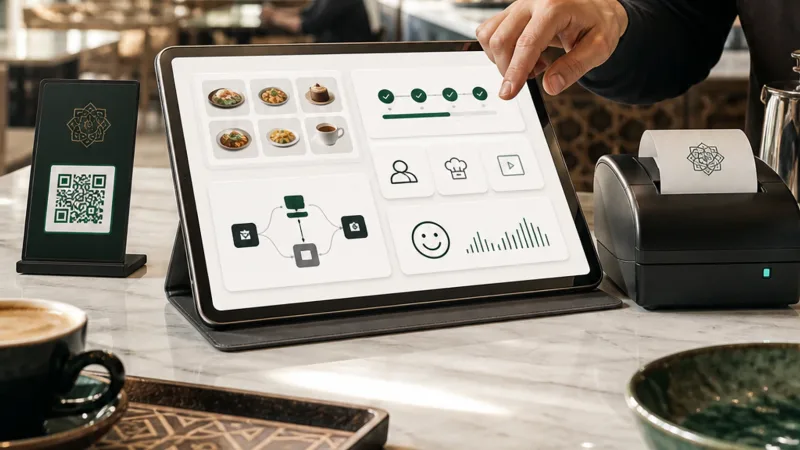
A café with four branches in Chilanzar launches a new drink. One branch is still showing the old price. At another, the waiter does not know the ingredients. At a third, a customer cannot get a clear answer about allergens. The advertising worked, the guest came in. But the information broke somewhere along the way.
That is exactly the problem a restaurant and training app for 2026 needs to solve. A guest opens the menu via QR and leaves feedback. An employee completes a two- or three-minute lesson tailored to their role. A manager compares sales and training results in a single dashboard. Telegram delivers reminders, while the connection to POS or ERP works through an API. Uzbek, Russian, and English are used equally depending on the audience and task. Artificial intelligence answers only from an approved knowledge base and separates recurring complaints from the noise. Our recommendation is firm: do not rush to build a super app. First, launch one process, such as rolling out a new menu across all branches without mistakes, and measure the result.
A product that benefits a restaurant does not start with a beautiful home screen. It starts with the real workflow during a shift.
01
The guest opens the QR menu, places an order, and leaves feedback in one place.
02
Each role gets a practical two- or three-minute lesson.
03
The manager sees sales, mistakes, and lesson results on one screen.
04
Reminders and tasks arrive in the channel the employee already uses.
05
Data from POS and ERP is transferred to the app via API.
Products already on the market have shown which part of demand actually works. Gastronomic brings together a QR menu, language selection, and rating survey in one place. Arbuz.kz connects ordering with product quality and user reviews. People do not open an app just for another catalog. They come in to choose a dish faster, check ingredients, or see a review they trust.
For a restaurant owner, the number of downloads is not a good KPI. Have wrong orders decreased? Is the waiter recommending the new dish more often? Did negative feedback reach the branch manager during that same shift? If the app cannot answer these questions with numbers, it is not an operational tool. It is an expensive display window.
Warning Putting the menu, courier flow, bonuses, training, and work schedule into the first version is the most common mistake. Choose the single most painful process. Expand the product only after you prove the result with numbers.
Imagine a restaurant chain in Tashkent with 120 employees launches a new seasonal menu. Sending a waiter a 40-minute course will not work. They will put the video off until later, while the manager will not be able to see who understood what. The working solution is much shorter: a three-minute lesson before the shift, five questions, and a simple scenario for recommending the product to a customer.
Once the lesson is finished, the check begins. The system compares test results with sales. Did the employee who completed the lesson sell the new dish more often? Are mistakes in allergen-related questions going down? If training is not connected to work outcomes, all that remains is a report saying “course completed.”
The value of a restaurant app is not on the screen. You see it in how an employee works on the next shift.
Celion engineering approach

Five pillars turn separate features into one operational product.
In Kazakhstan, Qazaq App teaches words through images, audio, and cultural questions, while motivating users with virtual “baursak.” According to Tech Media Central Eurasia, two days after launch, Aleem climbed above Duolingo in the App Store rankings. This is not about rejecting universal products. Familiar imagery and clear motivation push the user toward the next action.
In a restaurant app, context is also defined by the user. A guest in Samarkand may open the menu in one language, while a new employee may take a lesson in another. Uzbek, Russian, and English are selected according to the audience and task. Language is not a technical barrier. Notifications, microtests, and manager approvals via Telegram fit into the employee’s usual workflow.
The first version does not have to replace the entire restaurant management system. The sequence below reduces unnecessary cost and the risk of rework.
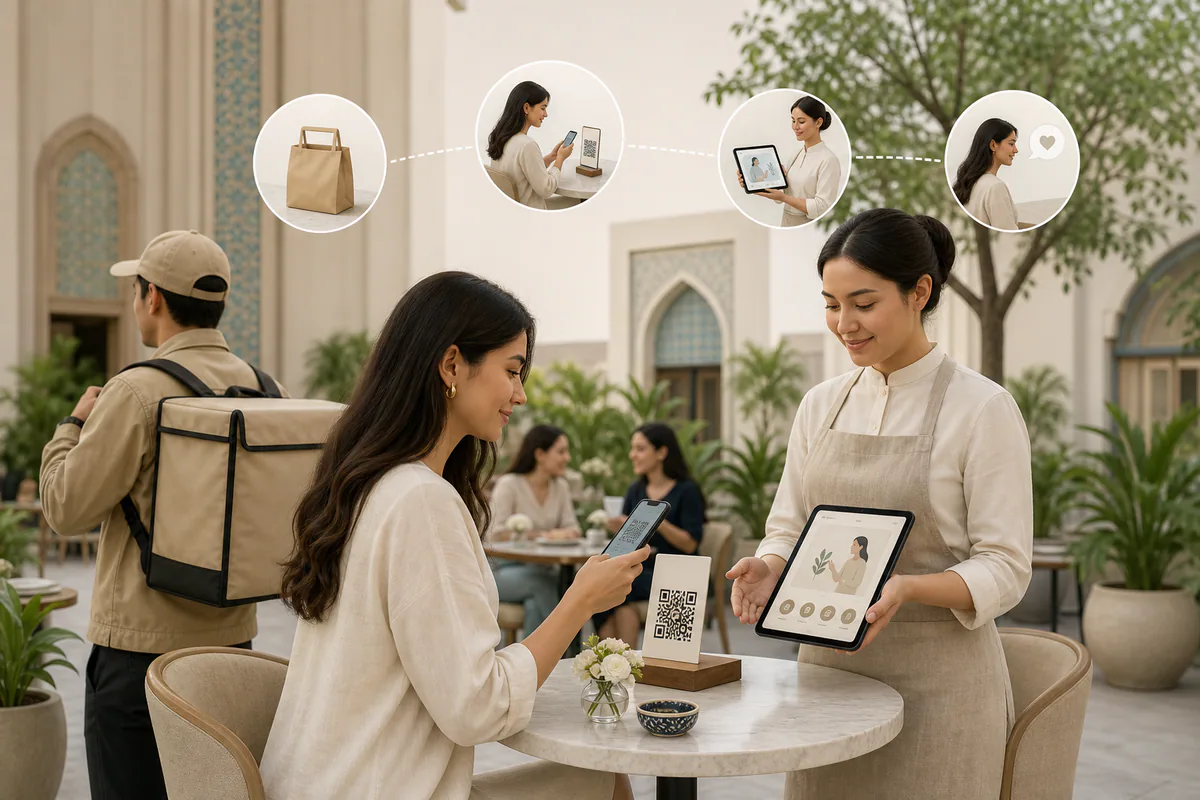
Delivery matters, but in-store experience and team knowledge matter just as much.
Artificial intelligence does not need to appear as a big button on the home screen. It brings more value in repetitive work: preparing a training card when the menu is updated, sorting guest feedback by topic, or finding an answer to an employee’s question in an approved guideline. If it is unclear which source an answer came from, the assistant creates a new mistake.
That is why we recommend a restricted assistant rather than a free-answer chat bot. It relies on the approved menu, standards, and internal rules. If there is uncertainty around price or allergens, it sends the question to a manager. Do not hand the decision over to artificial intelligence. Let it find information quickly, sort it, and make recommendations.
If you are planning a restaurant and training product for 2026, include these five criteria in the technical specification.
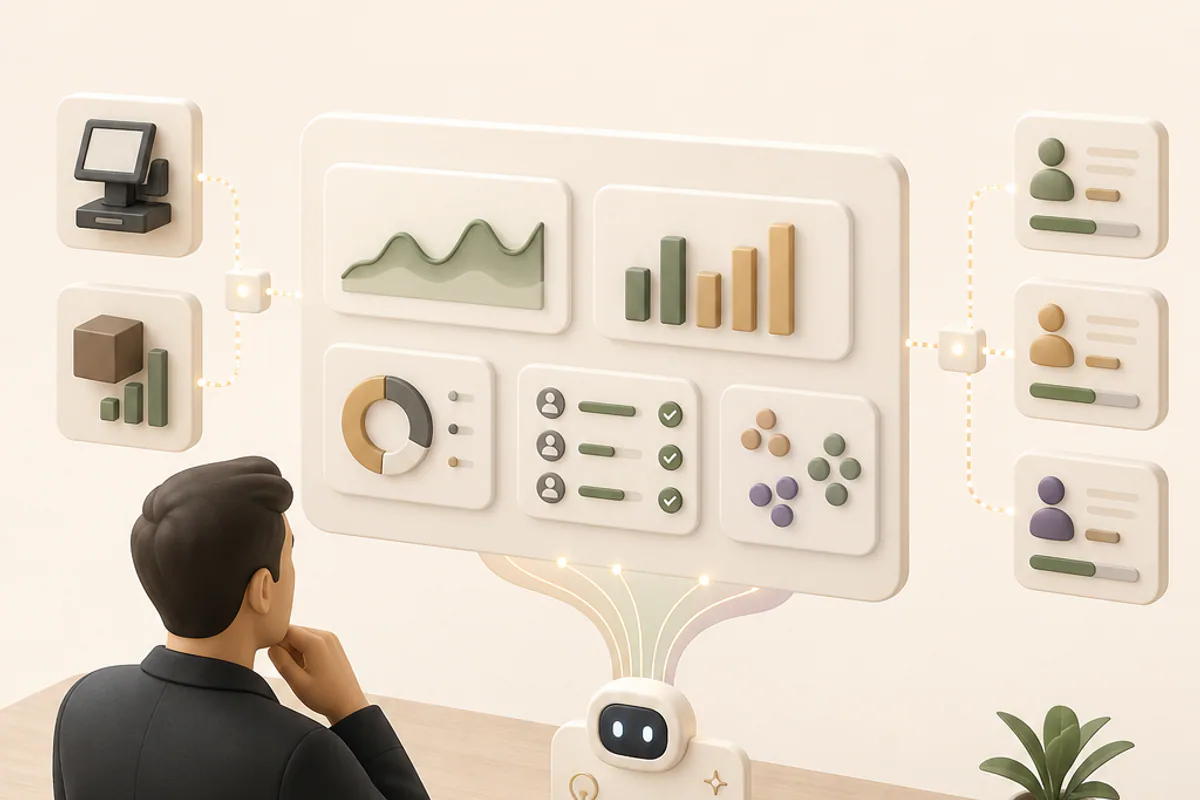
AI is useful when it connects data and suggests the next action.
Will combining the guest and employee parts in one app create confusion?
No, not if the interface is separated by task. The guest opens the menu through a QR link and leaves feedback. The employee sees lessons and tasks in a personal profile. The technical platform is one system, but each user only accesses the screens they need.
How much time and budget does this kind of MVP require?
A custom MVP consisting of a QR menu, microlearning, Telegram notifications, a management dashboard, and one POS integration is often built within 10-16 weeks. In the Tashkent market, the estimated budget may be 180-450 mln soums. The final price depends less on the number of screens and more on integration quality, data readiness, and security requirements.
Do we need to replace the existing POS or ERP system?
In most cases, no. First, check whether the system has an API, data export, or webhook. The new app can take order and product data from the existing system and add training and analytics layers on top. If the integration is closed, a secure intermediate module is built.
Which languages should the app support?
The business audience and the task determine the language choice. A chain in Tashkent may use Uzbek, Russian, and English together. In another city, two languages may be enough. The menu, training material, and artificial intelligence answers in every language should go through the same approval process.
Celion connects restaurant processes, Telegram, POS integration, and artificial intelligence in one practical product. Contact us to discuss your idea and define clear boundaries for the first version.
Callback
Leave your details and we will contact you shortly.
Become a Partner
Leave your contact details and we will get back to you shortly.
Order Service
Leave your phone number and we will contact you shortly.