
 Business Automation
 CRM Automation and Follow-Up for Sales Teams in Uzbekistan
A practical guide for Uzbek sales teams: how to eliminate manual entry, stop losing leads, and build automated follow-up...

Monday, 10:20 a.m. A customer asked for a price on Telegram, but the manager did not reply until the afternoon. By then, the customer had already received an invoice from another supplier. The ad generated the lead, but the order went to a competitor.
Sales teams in Uzbekistan lose leads mainly at three points. An inquiry is not recorded, the response comes too late, or the next follow-up is forgotten. It is wrong to blame the manager alone. If a Telegram chat, an Instagram message, a phone call, and an Excel spreadsheet are all disconnected, mistakes are inevitable. Automation enters the inquiry into the CRM, assigns the responsible employee, and tracks the response deadline. If the customer goes quiet, the system creates the next task. Meanwhile, the manager can see which advertising generated sales and at which stage the money got stuck.
We take a firm position on this: sales control cannot depend on an employee’s memory. A manager’s job is to sell. The system must handle records, reminders, and checks.
A furniture store in Tashkent may receive 30 inquiries a day. If eight go unnoticed on Telegram, five receive a reply only in the evening, and another four are never followed up, the advertising report will still look impressive. The cash register will tell a different story.
The U.S. Department of Commerce’s guide to e-commerce in Uzbekistan notes that online sales and digital payments are expanding. Businesses are receiving more inquiries, but buyers are not becoming more patient. They will not sit around waiting for a response.
Losses in a sales department usually begin at one of these four points.
01
Conversations on Telegram and Instagram are not connected to a single customer history.
02
An inquiry arrives, but the responsible manager does not see it in time.
03
A proposal is sent, but no task is created for the next call.
04
The manager sees where a lead was lost only at the end of the month.
Excel is useful for reporting. But it does not tell a manager that a new lead has arrived. It does not alert a supervisor that a chat has gone unanswered for 20 minutes, nor does it insist on calling back a customer who received a price three days ago. Keeping the spreadsheet complete depends on employee discipline. That is also its weakest point.
The value of a CRM goes far beyond storing information in one place. A properly configured system makes the next action mandatory: every new inquiry gets an owner, a deadline is set, and a reason must be selected when a lead is closed without a result. Then the note "the customer did not respond" is no longer an excuse. It becomes something that can be verified.
Warning
Do not buy a CRM only to move your existing disorder into it. Unless the process is simplified, the team will use the new system as nothing more than an expensive Excel spreadsheet.

Most losses happen at specific handoff points, not because the business lacks leads.
A good system brings inquiries from Telegram, website forms, Instagram, and phone calls into a single queue. Customers may write in Uzbek, Russian, or English. Every conversation is stored in that customer’s record. The language is chosen according to the audience and situation, while the quality of the process should remain consistent in every language.
For example, as soon as a new lead arrives, the CRM selects a manager based on the region or product type. If no response is sent within the set time, it issues a reminder. If the delay continues, it alerts the supervisor. After a commercial proposal is sent, the system automatically creates a follow-up task for two days later.
Do not start with a complex project. First, bring order to the area where the most money is being lost.
A business that entrusts sales control to a manager’s memory does not just lose leads. It loses money.
Celion engineering team

A spreadsheet stores data, but it cannot assign an owner or remind someone to call.
At the start of a project, we do not recommend a long list of KPIs. Three questions are enough at first: How quickly did the team respond to a new lead? How many leads moved to the next stage? Why were leads lost? These three signals help distinguish a problem with advertising from a problem with the team or the offer.
For example, if there are plenty of leads and responses are fast but few meetings are booked, traffic is not the problem. The questioning approach or the offer needs to be reviewed. If the response itself is late, fix the queue and notifications before training managers on a new script. Software should not hide a bad process. On the contrary, it must show exactly where the problem is.
Reducing lead loss does not begin with a large system. It begins with a clear process.
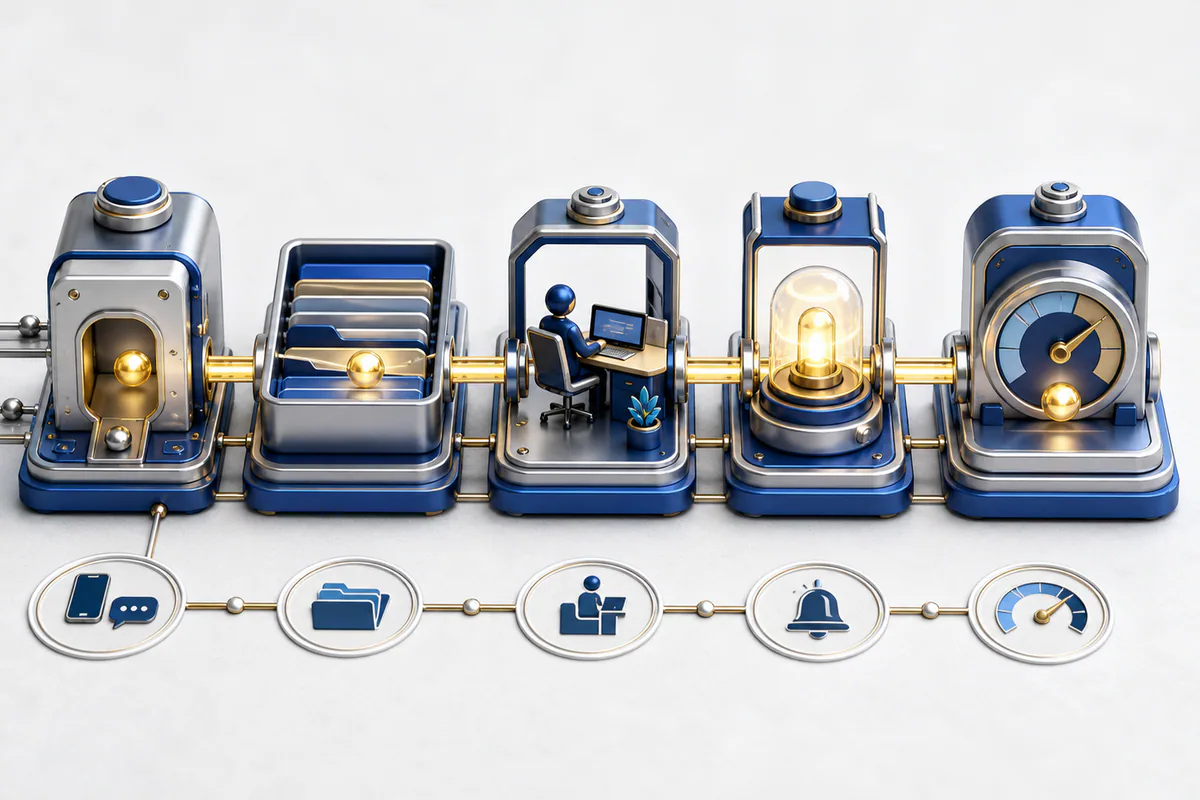
A connected process records the lead, assigns a manager, and makes the next step visible.
Does a small sales team need a CRM too?
Yes, if inquiries arrive through several channels or follow-ups are regularly forgotten. Even in a three-person team, leads can get lost between Telegram conversations, phone calls, and Excel. Just do not overload the CRM with unnecessary fields and stages.
Can Telegram inquiries be added to a CRM automatically?
Yes. A bot, API, or ready-made integration can create a lead from a new conversation, save the message history, and assign it to the appropriate manager. The solution depends on how the company uses Telegram: through a bot, a group, or separate operator accounts.
Will automation replace sales managers?
No. The system takes over repetitive work such as transferring data, creating reminders, and checking delays. Managers can then spend more time understanding customer needs, negotiating, and closing deals. The goal is not to reduce headcount, but to lose fewer leads with the same team.
How long does CRM implementation take?
For a straightforward sales process, an initial working version can be launched within a few weeks. Complex integrations with ERP, telephony, inventory, or payment systems will extend the timeline. It is usually better to launch one sales area first and then connect the remaining processes.
Which CRM should we choose?
Start with the process, not the brand. First determine where leads come from, how many managers will use the system, what reports are required, and whether integration with an existing 1C or ERP system is needed. Then compare the total cost of a ready-made CRM, a customized platform, and a bespoke solution.
Celion will analyze your sales process and connect Telegram, CRM, telephony, and internal systems into one working flow. Contact us. We will start by finding the point where the most money is getting stuck.
Callback
Leave your details and we will contact you shortly.
Become a Partner
Leave your contact details and we will get back to you shortly.
Order Service
Leave your phone number and we will contact you shortly.