 AI
What Is AI Implementation for Businesses in Uzbekistan?
AI implementation is not adding a chatbot. It is embedding intelligent agents into real business workflows - lead qualif...

AI automation for food processing means using cameras, sensors, and production records to detect defects, excess consumption, or equipment deviations early. Our recommendation is straightforward: before scaling production, do not deploy AI across every production area at once. Test it in the single process where the most costly losses occur.
According to the Statistics Agency of Uzbekistan, the country has 12 300 food manufacturing enterprises. A new line or an additional shift does more than increase output. It can also magnify existing defects, overfilling, and energy consumption. The right sequence for food production automation is simple: measure the loss, validate the data, and run a safe pilot. Scale only after the result has been repeated under different operating conditions.
A production scaling checklist should not begin with an equipment catalog. Start by reviewing the entire flow, from receiving raw materials to dispatching finished products. Link every loss to a product, batch, line, and shift. A note saying "too many defects" tells you nothing useful for decision-making.
For example, if packages regularly contain more product than the specified amount, a new packaging line will not solve the problem. On the contrary, the same deviation will recur at a larger scale during every shift. Excess energy use during drying and temperature deviations during cooling will multiply in the same way.
Use this formula to calculate losses in monetary terms: cost of loss = cost of defects + rework costs + losses from unplanned downtime + excess resource consumption. The process with the highest total is the strongest candidate for the first pilot.
The KPI must match the problem. In packaging, track overfilling and rejected packages. For equipment, measure unplanned downtime; for thermal processes, measure energy consumed per ton. Model accuracy is only a supporting metric. Business results are measured through food manufacturing waste reduction and increased saleable output.
A scientific review of AI in food manufacturing shows that the technology is already being used for quality control, process optimization, shelf-life assessment, and predictive equipment maintenance. Yet industrial-scale adoption still lags behind experiments and pilots. That is why high accuracy in a presentation is not enough. The system must deliver stable results on the production floor.
Do not introduce AI if the process itself is unstable. If scales are not calibrated, camera lighting keeps changing, or no one is assigned to respond to an alert, first put basic automation, maintenance, and work instructions in order. Otherwise, the model will not reduce the disorder. It will merely document it faster.
Final authority over food safety must remain with the operator and the existing safeguards. FAO's HACCP guidance requires records of monitoring, corrective actions, verification, and measuring-equipment calibration. If a critical limit is breached, the alarm or shutdown mechanism must activate without waiting for an AI recommendation.
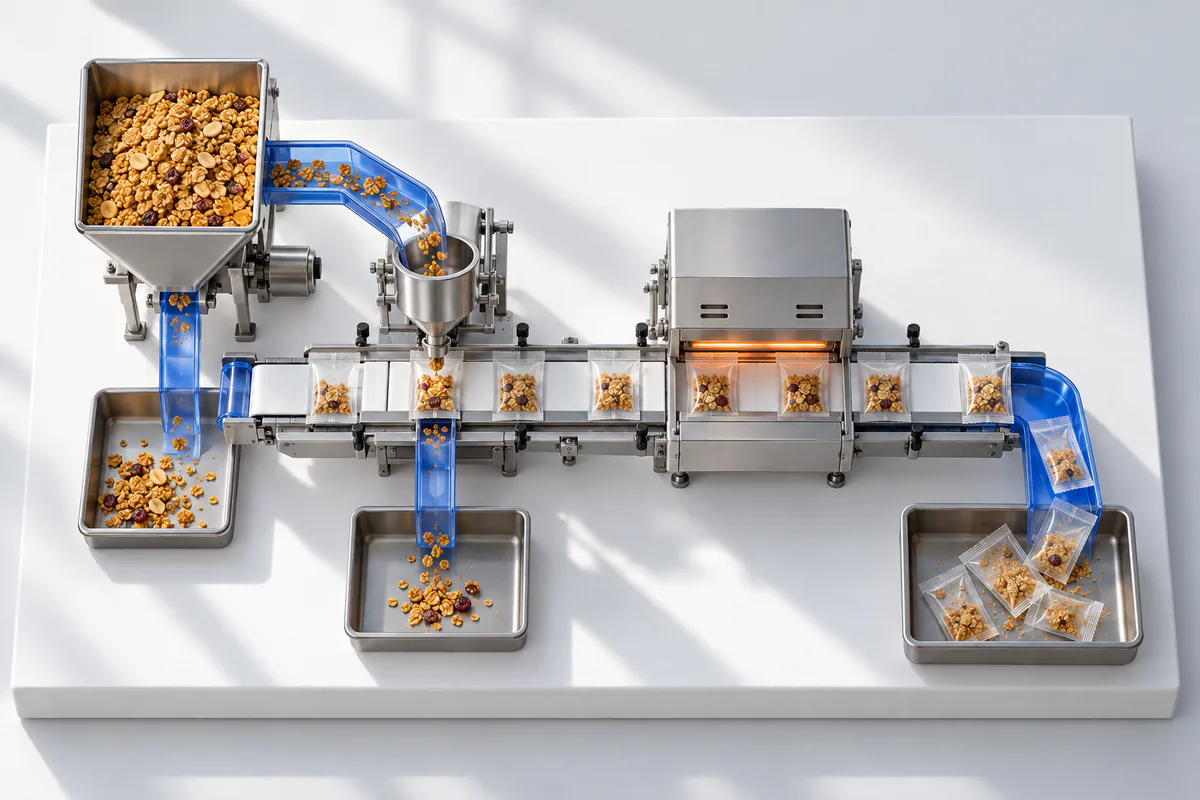
A large 1C database, Odoo modules, or numerous Excel files do not mean the company has enough data. When a technologist opens a batch number, they should be able to see the raw material source, equipment settings, quality results, and final output in one connected chain. Without those links, AI may guess what caused the waste, but it cannot identify the cause reliably.
At companies in Uzbekistan, hidden costs often appear before a license is even purchased. A shift supervisor sends a defect photo to a Telegram group, the technologist writes the cause in a paper log, and 1C retains only the total production volume. Without a shared batch identifier, linking these records for the model becomes expensive manual work.
Operators may enter comments in Uzbek, Russian, or English. The language should be chosen to suit the team and the working context. What matters is that reason codes are recorded consistently, mandatory fields are completed, and timestamps match the equipment records.
Uzbekistan's food safety system brings standards, company registration, risk assessment, and hazardous-product recalls under a unified oversight framework. Data collected for AI must therefore serve more than model training. It must also support inspections and the reconstruction of product movements.
Do not include only the software price in the budget. Cameras or sensors, calibration, integration with 1C or Odoo, staff training, and ongoing technical support are also costs. Cutting back on calibration and verification is particularly risky. A model trained on inaccurate measurements may work quickly, but its decisions will be wrong as well.
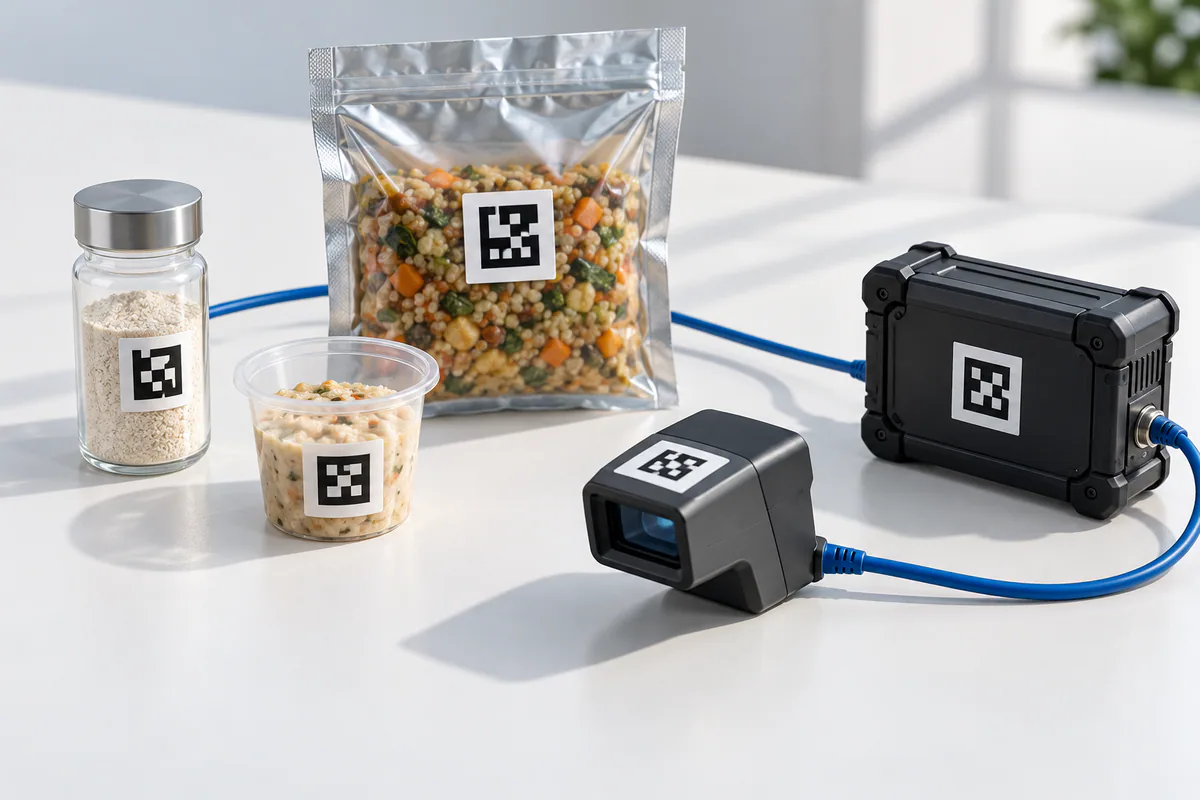
A food processing automation checklist should not begin with a software demonstration. Limit the pilot to one product group or line. Validate the result independently of the AI output, using a scale, laboratory test, or equipment log, for example.
The calculation for an energy pilot is simple: annual savings = reduced kWh × the company's current tariff. Under the tariff established on Lex.uz, electricity costs 1 100 soums/kWh including VAT for certain consumer groups. If your company operates under different terms, use the tariff shown on its electricity invoice.
Running the pilot only during a convenient shift is not enough. If another operator, a change in raw material quality, or seasonal temperatures undermine the result, the system is not ready for production scale. The rule is simple: if the benefit cannot be repeated under different operating conditions, do not buy more equipment.
Celion's AI automation audit identifies loss points at a food processing facility, assesses whether the data is ready for a pilot, and defines the safety boundaries. We then connect the selected solution to 1C or Odoo and configure monitoring based on production KPIs.
Callback
Leave your details and we will contact you shortly.
Become a Partner
Leave your contact details and we will get back to you shortly.
Order Service
Leave your phone number and we will contact you shortly.