
 AI
What Is AI Implementation for Businesses in Uzbekistan?
AI implementation is not adding a chatbot. It is embedding intelligent agents into real business workflows - lead qualif...
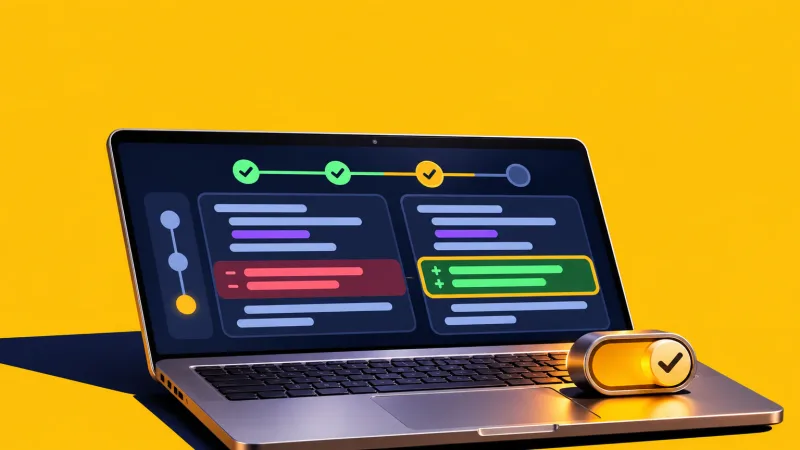
Claude Ship is a new tool from Anthropic that enables AI agents to work with code changes by reviewing, fixing, and approving them. It does not fully replace developers. The agent analyzes code, makes suggestions, and acts according to defined rules. Final control remains with the team. According to TechCrunch, the product was introduced on November 23, 2026. For companies in Uzbekistan, this does not mean “let AI write all the code.” The real question is which changes can be delegated to an agent and which ones must require human approval.
Claude Ship’s role does not end with generating code in a single chat window. The agent sees changes in the code repository, analyzes related files, runs tests, and suggests new changes to fix any problems it finds. The process is constrained by rules set by the team. In Anthropic’s announcement, Ship is described as a tool for reviewing code and bringing changes into a controlled process.
The word “approval” should not be interpreted too broadly here. An AI agent may check whether code meets technical requirements. But it cannot guarantee on its own that a change complies with a business rule, does not alter the price shown to customers, or does not expose personal data.
That is why you should start an agent with small changes that are easy to roll back. For example, adding a test, improving an error message, or fixing a filter on an internal reporting screen. Code related to payments, payroll, discounts, user permissions, and data exports should not reach production without human approval.
In many companies, developers clear a queue of small technical tasks before they can write a new feature. Multiple reviews, waiting for test results, and repeated fixes stretch the work out. An agent such as Claude Ship could handle some of these repetitive tasks in parallel, leaving developers more time for decisions that require their judgment.
This may be especially interesting for companies that accept orders through Telegram or connect CRM and Odoo with 1C. For example, an agent can identify an error in an integration. But a manager or project owner must decide which system will serve as the “source of truth” for the balance in 1C. Changing code faster can also put the wrong business rule into operation faster.
In Uzbekistan, preparing permissions often requires more work than writing code. If an agent is given access to a Git repository, test environment, database, or deployment server, its read and write permissions should be separated. Systems handling tax, payment, or customer data should use test copies instead of real data.
Research on AI readiness in Central Asia shows that the issue should not be reduced to choosing a model. Infrastructure, skills, and governance need to be prepared together. That is why, before saying “we’ll connect Claude,” a company should identify which part of its code process lacks sufficient control.

Technical configuration alone is not enough to deploy an AI agent safely. The team should create a written rule defining what the agent may read, what it may change, and when it must ask a person before taking action. This makes it possible to conduct a specific review instead of having a vague debate about “AI making a mistake.”
We would start with the following simple criteria:
For every code change, at least the following information should be recorded: what changed, which test was run, what data was accessed, who approved it, and how to roll it back if a problem occurs. The list looks simple, but when an agent is introduced, this is often exactly the part that gets overlooked.
Claude Ship’s documentation provides technical guidance on using and managing agents. The capabilities described in the documentation cannot replace a business authorization policy. Anthropic’s supported-regions policy should also be checked separately. Availability may depend on the account, plan, and organization settings.

At Celion, we would not begin a project like this by placing an agent across the entire codebase. First, choose one clearly defined flow. For example, fixing errors in an internal admin panel or checking a module with insufficient test coverage. Define the flow’s inputs, outputs, permissions, and rejection conditions in advance.
In the first trial, “how much code did the agent write?” should not be the KPI. That creates the wrong incentive: an agent may write more lines while also creating more problems. Better metrics include the number of reopened bugs, time spent on human review, failed tests, and rolled-back changes.
Connect the agent to an isolated test environment rather than to random scripts on a personal laptop. Access to the code repository should use a separate service account, minimal permissions, and a log of all actions. A Telegram request saying “push it to production quickly” must not bypass the approval process.
For a company in Uzbekistan, the decision is straightforward: if the team already has version control, testing, and code review in place, Claude Ship can be a useful accelerator. If code is deployed to a server manually, nobody knows who changed what, and there is no test environment, put the process in order first. Add an agent to disorder, and it will simply be repeated faster.
Celion helps safely connect AI agents to existing CRM, ERP, API, and internal software systems, develop authorization policies, and automate testing and deployment processes. Choose one code flow today: once its risks, approvals, and rollback plan are documented, you will have a solid foundation for testing Claude Ship.
Callback
Leave your details and we will contact you shortly.
Become a Partner
Leave your contact details and we will get back to you shortly.
Order Service
Leave your phone number and we will contact you shortly.