
 AI
What Is AI Implementation for Businesses in Uzbekistan?
AI implementation is not adding a chatbot. It is embedding intelligent agents into real business workflows - lead qualif...

A 20-billion-token Uzbek language corpus gives AI a major resource for learning to understand, search, and generate text more effectively. But the corpus alone will not create an agent that gives customers the right answers on Telegram. That requires cleaning the data, connecting domain knowledge, and testing responses against real queries.
On November 25, 2026, Gazeta.uz reported that Uzbekistan had made a large Uzbek-language corpus freely available to international AI companies. This is not a ready-made business product. It is an infrastructure layer that could be used to improve Uzbek-language search, customer service, and document automation systems.
During a discussion in the Legislative Chamber of the Oliy Majlis on November 24, 2026, Minister of Digital Technologies Sherzod Shermatov put the corpus size at 20 billion tokens. Parliamentary and ministry materials link this figure to approximately 6.1 billion words and 6.5 million documents.
However, the publicly available Uzbek Language Corpus v1.4 card lists 6.062 billion words and 5.637 million documents. It does not give a total size of 20 billion tokens, nor does it disclose the tokenization method.
This discrepancy does not necessarily mean that there is an error. The figure cited by the minister may refer to a different stage of processing or a broader dataset. Current public sources do not explain it. Businesses should therefore base decisions not on the “20 billion” headline, but on the contents of the downloadable data and the results of practical testing.
A token is not the same as a word. Depending on the method a model uses, one word may be split into one or several pieces. When evaluating a corpus, the number of documents alone says little. Text quality, the balance of sources, and how well the data fits the task you are solving matter more.
The corpus includes books and web pages in both Latin and Cyrillic scripts. It also contains archives, educational materials, and legal texts. This data could help a model learn word forms, sentence structure, and the relationships between the same concepts expressed in different writing systems.
Potential benefits may emerge in Uzbek-language document search, query classification, translation, and content generation. The KyrText study shows that additional training on a local-language corpus improved performance across several natural language tasks. This confirms that the method can work. However, open benchmarks have not yet demonstrated that Uzbekistan’s corpus improves the performance of GPT, Claude, Llama, or Qwen.
The main limitation is that much of the corpus comes from publications and official texts. Short, error-filled, context-heavy Telegram questions such as “Do you have size 42, and can you deliver it to Sergeli tomorrow?” do not resemble the language of books or laws. OCR artifacts, dialect coverage, and the share of real conversational language must be evaluated separately.
It would be a mistake to treat the corpus as a source of business truth. It can help a system understand how users communicate. Inventory levels, current prices, customer balances, and delivery times must still come from 1C, Odoo, CRM, or another internal system.
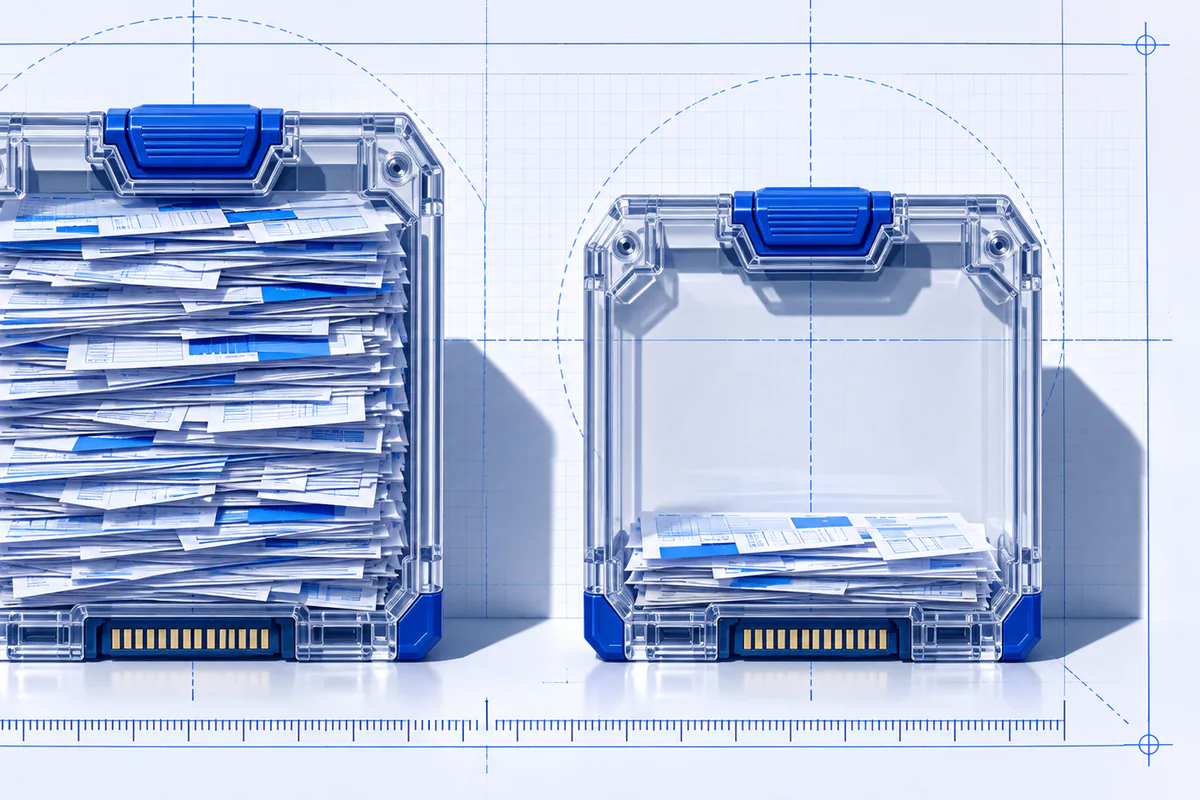
We do not recommend that most companies build a language model from scratch. The first step should be to solve one clearly defined task using an existing model, enterprise search, and internal systems integration. If testing reveals recurring language-related errors, the corpus can then be used to adapt the model.
This workflow map is enough to get started: channel → user message → verifiable source → expected response → system action → reason for escalation to an operator. The map makes it clear where AI should generate text, where it should retrieve data through an API, and when it should hand the request over to a person.
If a company receives few recurring requests, data usage rights remain unclear, or reliable information cannot be retrieved from internal systems, do not spend money on model adaptation. In that situation, a well-organized knowledge base, basic search, or strict rules-based automation will be cheaper and safer.
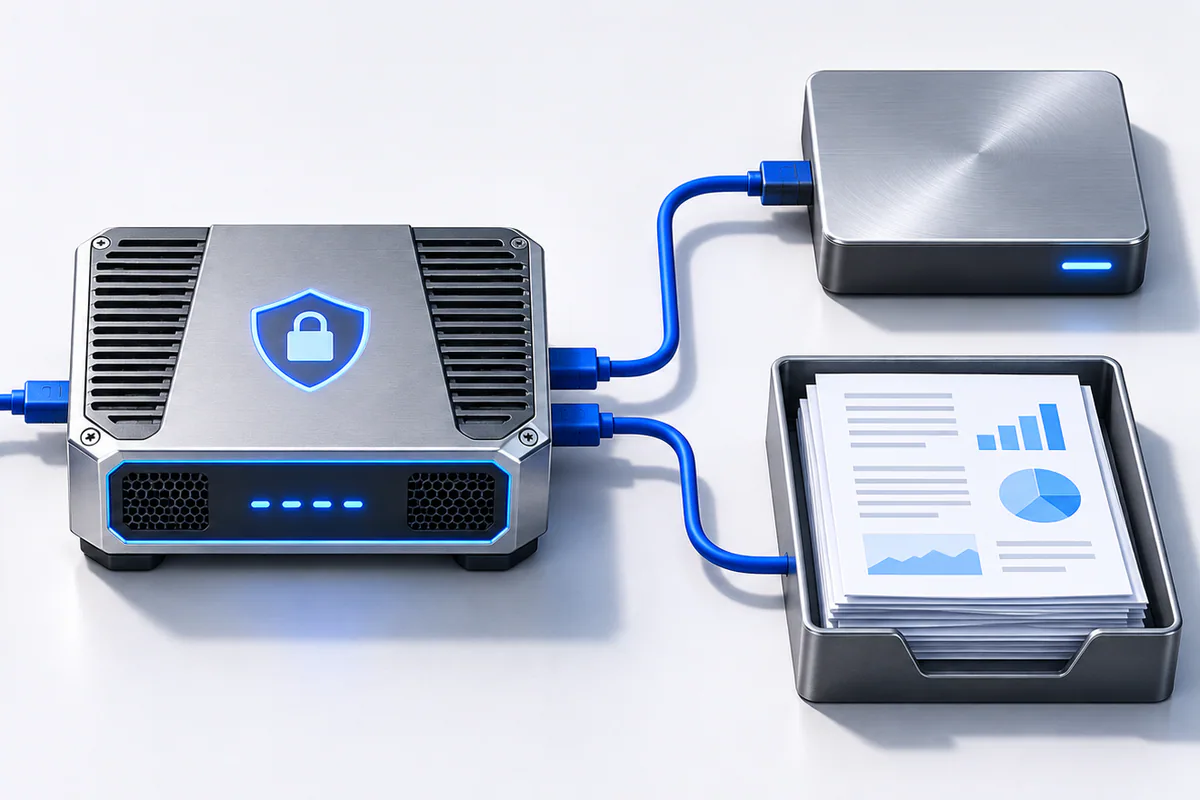
For Celion, the value of this development is not in selling a ready-made Uzbek chatbot. The opportunity lies in building a practical layer that connects the corpus and existing AI models to a company’s approved data, Telegram channel, and CRM or ERP system.
Consider a distributor. A model may correctly understand a customer asking in Uzbek whether a product is in stock. But the answer must come not from the corpus, but from current inventory data in 1C or Odoo. The corpus helps the system understand language, while company systems provide verifiable information. Mixing the two leads to answers that sound convincing but are wrong.
The work should begin with one clearly defined queue—for example, product and delivery questions received through Telegram. Approved sources are then connected, responses are logged, escalation rules are established, and a multilingual test set is created. Additional training or model adaptation using the corpus should be considered only if testing shows the same error occurring repeatedly.
This approach makes it possible to use a large corpus safely in real business processes. Define the task and the source of truth first. Choose the model afterward.
Celion’s AI agent implementation and systems integration service can help build a controlled test system using data from Telegram, CRM, 1C, or Odoo. We begin with one customer or employee task that occurs most frequently.
Callback
Leave your details and we will contact you shortly.
Become a Partner
Leave your contact details and we will get back to you shortly.
Order Service
Leave your phone number and we will contact you shortly.