
 AI
AI What Is AI Implementation for Businesses in Uzbekistan?
AI implementation is not adding a chatbot. It is embedding intelligent agents into real business workflows - lead qualif...
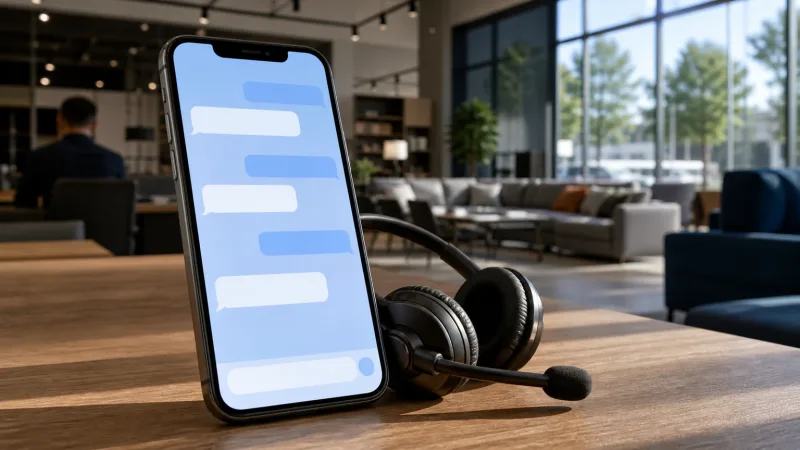
A Telegram bot can answer routine questions first while passing complex, emotional and high-stakes inquiries to an operator. Compare resolved inquiries, handoff quality and total operating costs, not just the subscription price.
For many businesses in Uzbekistan, the model that works is this: a Telegram bot should be the first point of contact, with the call center serving as the second stage for more complex situations. If the budget only covers one, businesses in retail and services that receive many repetitive questions are usually better off starting with a bot. It responds at night, reduces queues, and keeps customers in the channel they already use.
But forcing every inquiry through a bot is a mistake. Disputes, returns, unusual payments, medical concerns, and conversations about expensive purchases should be taken over by an operator. In a good system, the bot completes simple tasks. If it cannot provide an answer, it passes the conversation and customer details to an operator. For consultative sales, urgent inquiries, or businesses where mistakes carry a high cost, the call center should remain the first point of contact.
The following prices are hypothetical inputs, not market rates or a quotation. Replace them with your own integration, support, platform and staff-time costs before making a decision.
| Input / result | Illustrative value |
|---|---|
| Monthly inquiries | 3,000 |
| Routine inquiries the bot can complete | 60% = 1,800 |
| Operator time per inquiry | 4 minutes |
| Gross time released | 1,800 × 4 / 60 = 120 hours |
| Bot supervision and updates | 20 hours/month |
| Net time released | 100 hours/month |
| Value of one operator hour | 50,000 UZS |
| Value of available staff capacity | 5,000,000 UZS/month |
| Bot running costs | 1,500,000 UZS/month |
| 12m UZS setup spread over 12 months | 1,000,000 UZS/month |
| Total cost for comparison | 2,500,000 UZS/month |
Capacity worth 5m UZS is not automatically a cash saving: payroll remains if staffing is unchanged. The released time must improve sales or complex service. In a pilot, measure completed inquiries, repeat contacts, customer ratings and whether operators receive the full conversation context.
There is no need to make customers install another app or remember yet another password. According to the National Statistics Committee, 94.2% of the population uses the internet. For many people, Telegram is already an everyday channel for messaging and contacting businesses.
The 76% reach reported in Wunder Digital’s analysis makes the choice even more straightforward. A Telegram bot is not a toy to deploy as an experiment. It shows order status, answers questions, or forwards inquiries to an operator—all in a place where the customer already spends time.
Sending every inquiry to a bot is inefficient. Sending every question to an operator is no better.
01
The bot checks the order number and immediately displays the delivery status.
02
The bot finds the price and stock level in the catalog and, if needed, shows the appropriate branch.
03
An operator listens to the customer, reviews the evidence, and offers a clear solution.
04
When the product is expensive or technical, customers need human advice, not a preset menu.
Imagine a home appliance store in Tashkent receiving 300 inquiries a day. More than half are about business hours, installment payments, delivery, and order status. The operator keeps typing the same answers over and over, while a customer who is ready to buy waits in the queue.
When a bot takes over repetitive questions, the operator does not become redundant. Instead, they have time to close sales, ease customer frustration, and resolve unusual situations. It is a mistake to judge a bot project only by the payroll savings it may generate. Faster responses, fewer lost inquiries, and more operator time for complex conversations bring greater value to the business.
Warning
A bot with a seven-button menu and no way to reach an operator is not a service. It is a digital wall. If customers cannot find an answer after two attempts, the bot should immediately offer to connect them with a person.
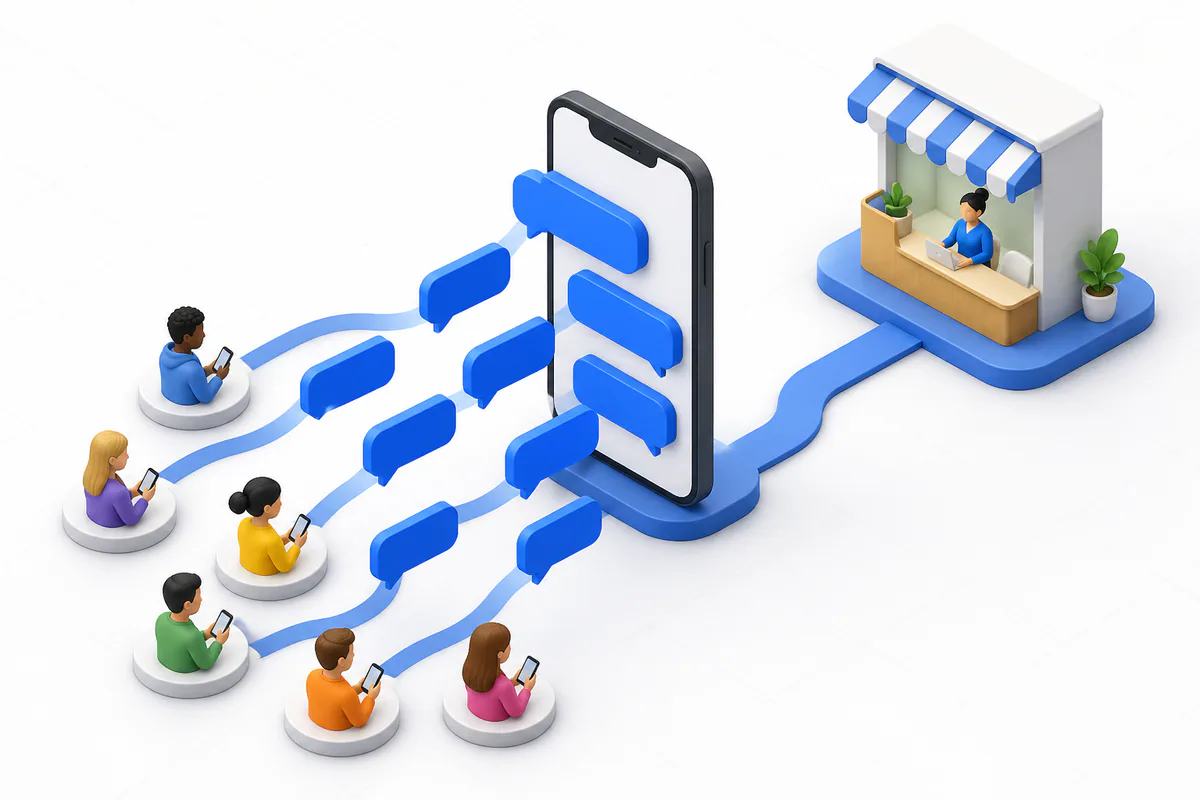
Telegram is a convenient first contact point for frequent questions.
In many projects, the problem is not the bot’s answers but the handoff to an operator. The customer has already entered an order number, phone number, and description of the issue. Then the operator asks for all the same information again. Instead of saving the customer’s time, this kind of automation wastes it twice.
A properly designed system attaches the conversation history to the inquiry in the CRM, routes it to the relevant department, and gives the operator a concise summary. Inquiries in Uzbek, Russian, and English can all be handled within the same workflow based on the audience. Language is not a technical barrier. Results depend on clear scenarios, data quality, and the speed of the handoff to an operator.
Launch a small workflow first. See what fails in real conversations, then expand.
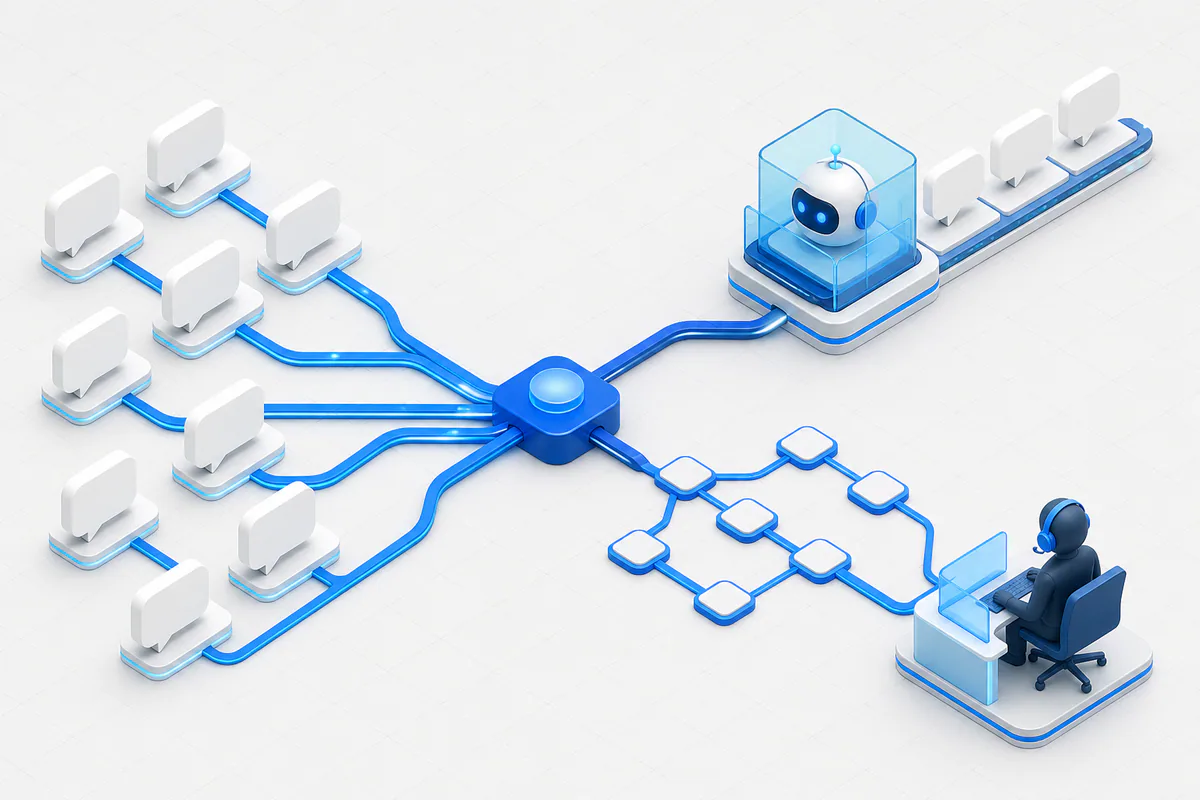
Clear task routing speeds up replies while preserving service quality.
At a private clinic in Samarkand, a bot can find an available appointment and direct the patient to the right type of doctor. But making someone navigate a menu while experiencing severe pain, a reaction to medication, or another emergency is dangerous. A person should handle such an inquiry immediately.
The same rule applies to real estate, B2B equipment, and expensive services. When the purchase value is high, the question is unclear, or a mistake could seriously damage the company’s reputation, the call center should take the lead. A Telegram bot can still help: it receives the request, gathers the necessary information, and sends the consultant a ready-to-handle inquiry.
Do not focus on the name of the channel. Look at the type of inquiry and how much a mistake could cost the business.
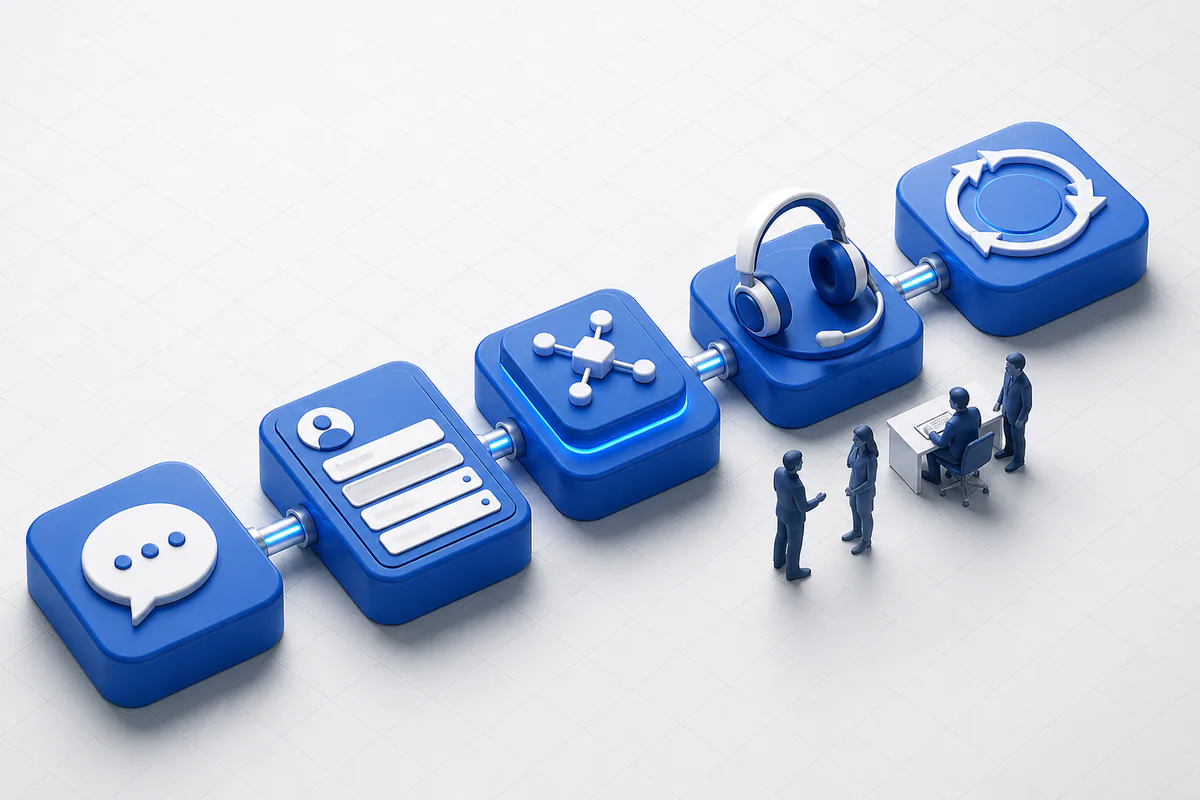
A reliable system connects intake, automation, and operator handoff.
Can a Telegram bot completely replace operators?
Not in most businesses. A bot handles clearly defined tasks such as checking order status, prices, business hours, and registration well. An operator is still needed for disputes, complex advice, unusual payments, or emotional conversations. The goal is not to remove employees but to free their time for more complex and profitable work.
How much does it cost to develop a Telegram bot?
The cost depends not on the number of buttons but on the complexity of the integrations and scenarios. A system connected to a CRM, ERP, payment service, or order database requires more work than a simple informational bot. Start with a pilot project that has a limited scope. If it proves its value, add further modules.
Can a bot work in Uzbek, Russian, and English?
Yes. Customers can choose a language at the beginning of the conversation, or the system can detect it from the text they enter. The same service scenarios, database, and operator handoff rules can be built for all three languages. Language options should be selected according to the business audience and the inquiries it receives.
How should the results of a bot and call center be measured?
Track first-response time, the share of inquiries completed within the bot, reasons for operator handoffs, unanswered requests, and customer ratings. Message volume alone proves nothing. Use CRM data to determine whether the bot leads to orders, appointments, or successful issue resolution.
Celion connects Telegram bots with CRM, ERP, and operators’ daily workflows. Contact us. We will review your inquiries, identify which tasks should go to the bot, and determine when an operator should join the conversation.
Callback
Leave your details and we will contact you shortly.
Become a Partner
Leave your contact details and we will get back to you shortly.
Order Service
Leave your phone number and we will contact you shortly.