 Web & Software Development
How Celion Builds a Website: From First Message to Launch
Celion builds websites not as decoration, but for a business purpose: we map the customer journey, add security from the...
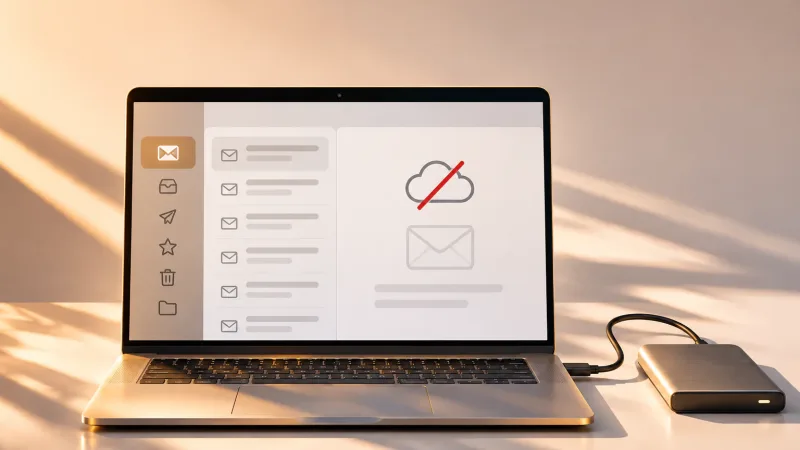
In an article dated November 13, 2026, TechCrunch reports that an email failure at Microsoft escalated into a large-scale cloud outage, with services beginning to recover after nearly 18 hours. The global Microsoft cloud outage highlights one thing: Microsoft 365 or Azure going down is not a rare exception. It is an operational risk that must be managed.
The recommendation is straightforward: do not rush to build an expensive multi-cloud architecture. First, identify the workflows that depend on a single provider. Then establish an independent communication channel, store backups in a separate environment, and test the recovery procedure in practice.
At first, the incident appeared to be an outage affecting services in the United States and across the Americas. It then spread to other regions. The publication attributes this to a cascading software issue: engineers struggled to restore failed servers, while the email problem spread to other parts of Microsoft’s infrastructure.
There is no single universal answer to why Microsoft services stopped working. A flawed software update, an incorrect network route, or a failure in an identity service can make an otherwise healthy system unusable. For example, even if an application server is still running, employees cannot use it if access through Entra ID is unavailable.
The source date does not align with the current calendar. The original material must therefore be verified again before publication. Other search results should not be linked to this incident without evidence. For example, a report about a geology procurement in Kazakhstan provides no evidence about Microsoft, cloud resilience, or the impact on businesses in Uzbekistan.
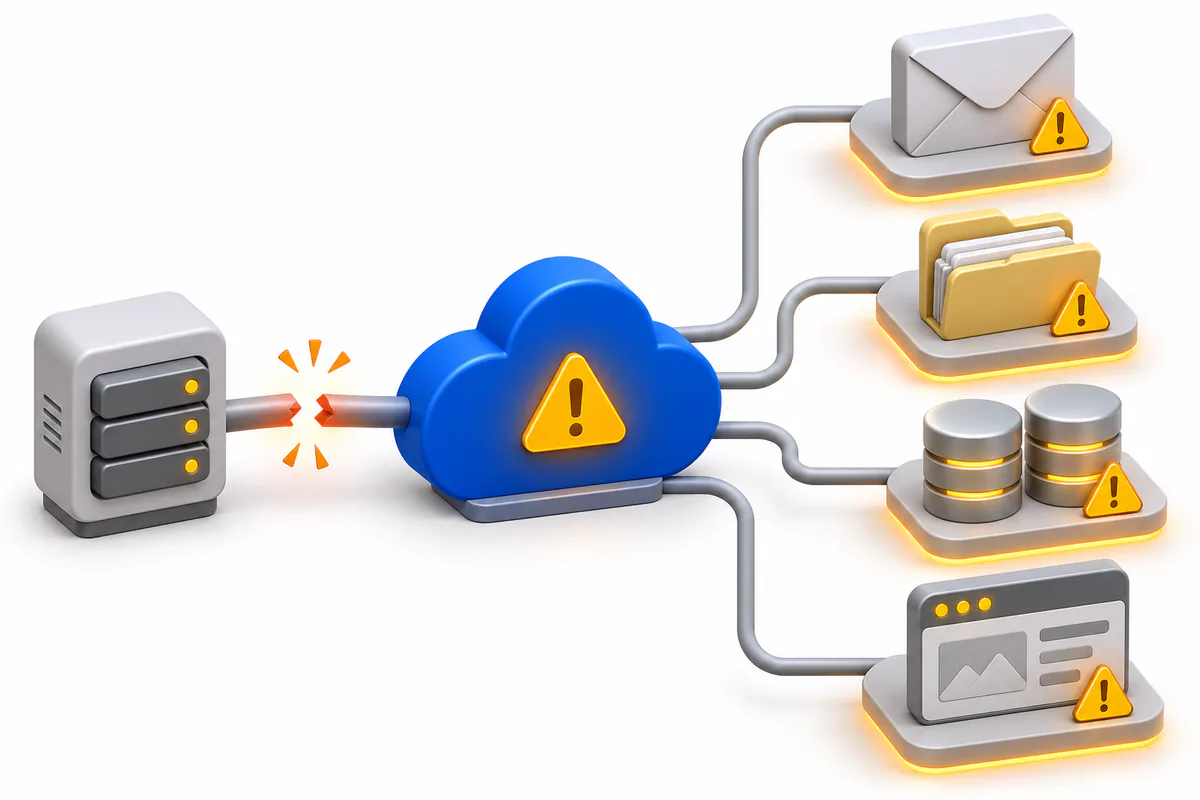
A Microsoft Azure cloud global outage is not limited to a website becoming unavailable. If Outlook and Teams are used for communication, Entra ID for system access, and the website and API are hosted on Azure, a single incident can halt both employee workflows and customer orders.
Local dependencies must also be considered. For example, a website may be hosted on Azure, orders may be transferred through an API to 1C or Odoo, and a manager may send updates to customers through Telegram. If the website or API goes down, customers may continue sending messages, but the manager can no longer see inventory levels or order statuses. That is how a technical outage turns into a broken promise or a lost order.
An alternative channel may also depend on the same infrastructure. Telegram can serve as the primary communication channel during an outage. But if the bot, webhook, and database are also hosted on Azure, that channel is not a real fallback.
Not every small company needs parallel copies of the same system across multiple clouds. Such an architecture is expensive and difficult to manage. If the cost of downtime is low, a separately stored backup, an independent communication channel, and a documented manual operating procedure may be the more sensible solution.
When cloud services go down, the team should not waste time guessing at the cause. The technical lead records the outage. The business lead identifies which operations have stopped. The customer service team distributes only confirmed information.
A cloud disaster recovery plan is more than a copy of your files. Backups should be stored outside the same tenant or subscription, access to them should be protected separately, and recovery tests should be performed regularly. The plan should define the RPO—the amount of data the business can afford to lose—and the RTO—the length of time a service can remain unavailable.
After the outage, reconstruct the sequence of events. Document which alert arrived, which decision was delayed, and which alternative route failed. This analysis is not about assigning blame. Its purpose is to enable faster, safer decisions during the next outage.

Celion begins this work not by replacing the provider, but by mapping dependencies. The map covers the web layer—the website, API, and database—as well as Microsoft 365, identity services, and integrations with Telegram, 1C, or Odoo. It also identifies the owner of each system. This makes it clear which business processes will stop when a particular service goes down.
The next step is to choose a solution that matches the level of risk. The business may need a static emergency page for customers and a temporary queue for orders. Backups are stored in a separate environment, Telegram alerts and a monitoring dashboard show the current status, and an alternative route is defined for critical APIs. We do not recommend building expensive parallel infrastructure unless the cost of downtime justifies it.
The decision rule is simple. If a system failure would stop sales or payments, or prevent the company from keeping a promise to a customer, the system owner, alternative operating procedure, backup location, and recovery test must all be documented. If any one of these fields is blank, the business continuity plan is not ready yet.
Use Celion’s web systems architecture audit and integration development services to identify critical dependencies, define fallback routes, and test recovery procedures in practice.
Callback
Leave your details and we will contact you shortly.
Become a Partner
Leave your contact details and we will get back to you shortly.
Order Service
Leave your phone number and we will contact you shortly.