
 Business Automation
CRM Automation and Follow-Up for Sales Teams in Uzbekistan
A practical guide for Uzbek sales teams: how to eliminate manual entry, stop losing leads, and build automated follow-up...

DMed’s next priority should not be expanding coverage. First, the system must operate without interruption and exchange data with private healthcare providers. Electronic queues will not solve shortages of doctors or beds either. They are useful only when they allocate existing capacity properly.
Information published on November 24 and 25, 2026 made the problem clear: digital healthcare has reached a large scale, but DMed outages, unclosed referrals, and gaps between systems are sending patients back to reception desks. New screens can wait. The data flow and accountability at every stage must be fixed first.
According to information from a parliamentary hearing published by UzA on November 24, 2026, 44 million laboratory results have been digitized in the system. However, DMed is still not fully operational across all public institutions, while integration with private clinics remains insufficient.
The next day, queues for subsidized scheduled treatment were discussed. A November 25 report said that electronic referrals left technically open were creating an “artificial queue.” Even if a patient has received treatment, moved to another institution, or declined the service, their record may remain in the queue.
AI projects have also reached a substantial number of patients. According to Spot, AI MAMMO has processed more than 54 thousand mammograms. Yet public sources do not provide enough data on false-negative results, effects on clinical decisions, or independently validated savings. The number of examinations processed shows the scale of adoption. Quality of care is measured by different criteria.
An electronic queue does not end with adding a patient to a list. The system must know which doctor, piece of equipment, or bed is available. It must also detect duplicate records and automatically close completed referrals. Otherwise, the paper queue has simply been moved onto a screen.
For private clinics and laboratories, this is a direct cost issue. If a result is not connected to DMed, an operator must enter it again and may make a mistake in the patient’s name or passport details. If the doctor cannot see a previous examination, they may order the same test again. Reception staff and doctors lose time, and the patient loses trust in the system.
The wrong KPI hides the problem even further. The “number of patients in the queue” does not, by itself, show a clinic’s actual workload. Open referrals inflate the figure. Closing records in bulk can make reports look better even when clinical capacity has not changed. That is why completed services and waiting times must be tracked alongside the clinic’s available capacity. The reason for each cancellation must also be recorded separately.
The same standard applies to AI. Do not automate clinical decisions without validated data, physician approval, and someone accountable for reviewing errors. Start with low-risk tasks instead: transcribing text, searching documents, or preparing consultation notes.
Before purchasing a large platform, a clinic manager should choose a single service pathway. Take, for example, a patient referred from a family clinic to a diagnostic center. If every status along that pathway and the employee responsible for it are not clearly defined, integration will not fix the error. It will only transmit it faster.
We would begin by mapping the following fields:
Next come the operational rules. A completed service closes the referral. The system warns users about duplicate active referrals. A newly available appointment is offered to the next patient in line. Telegram is a convenient channel for communicating with patients in Uzbekistan, but messages should not include diagnoses or unnecessary personal data. A bot can confirm an appointment and provide a secure link to cancel it or choose another time.
The decision rule is simple: automation should be introduced when the benefit gained from reducing manual work and repeated examinations outweighs the cost of integration and support, as well as the risk of errors. If the real problem is a shortage of doctors, equipment, or funding, software should not hide it behind a polished report.

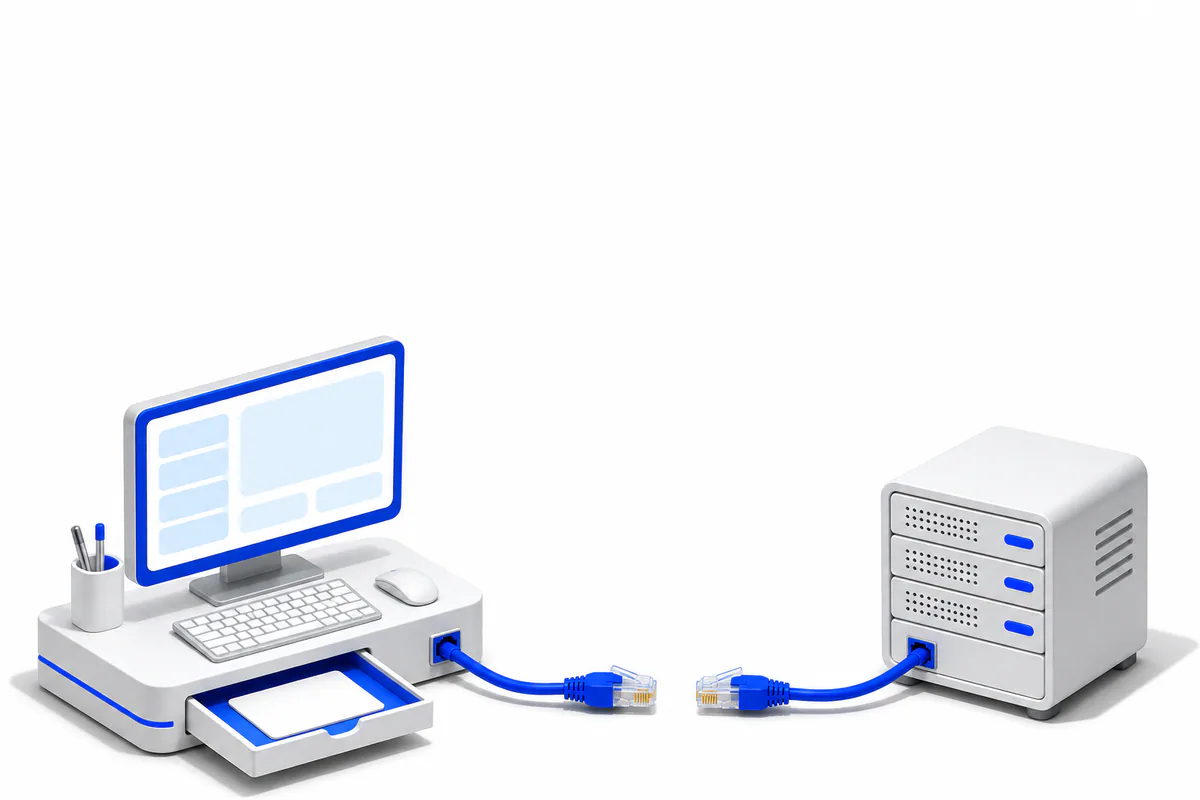
We do not recommend building yet another large healthcare platform to replace DMed. Practical value comes from creating a controlled integration between DMed and the clinic’s existing system. An API or FHIR connector transfers the data. A status log shows where an error occurred.
At a diagnostic center, a laboratory or medical imaging system can be linked to the referral. Across a clinic network, a shared schedule can show actual clinical capacity, while queue analysis can separate duplicate appointments from patients who did not attend. A Telegram reminder should not operate as a standalone bot. It should be part of the referral status chain.
If AI is needed, it is better to use it as an assistant first. It can prepare consultation notes, extract fields from documents, or help a doctor find previous results. Final clinical decisions and exceptional cases remain under human oversight. Every change is recorded in an audit trail.
As projects to strengthen primary healthcare expand, private clinics should not try to replicate the public system. The right approach is to build a data model that is ready to connect to it. Make one patient pathway work from start to finish first. Then apply the same model to other services.
Celion develops API integrations, electronic queue analytics, and custom software for healthcare systems. Contact us to map the process that needs to connect with DMed and assess the technical solution together.
Callback
Leave your details and we will contact you shortly.
Become a Partner
Leave your contact details and we will get back to you shortly.
Order Service
Leave your phone number and we will contact you shortly.