 Odoo
How Odoo Is Transforming Supermarkets in Uzbekistan: A Real Case Study
If you run a supermarket or grocery store in Uzbekistan, and you want transparency, control, and growth — Odoo is the sy...
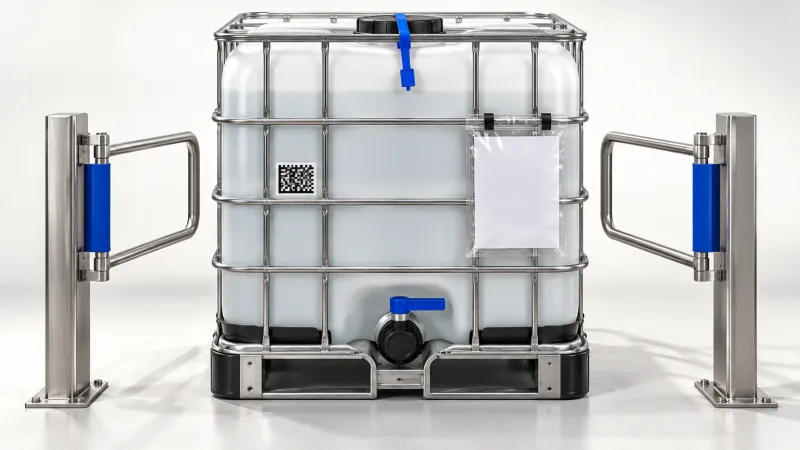
Odoo Uzbekistan can help a chemical manufacturer trace every batch from raw material receipt to customer shipment. Products with no certificate, an expired certificate, or a certificate belonging to another lot should not leave the warehouse. Attaching a certificate as a PDF to the product record is not enough. There must be a mandatory link between the lot, quality inspection, and shipment.
Implementation costs depend less on the number of Odoo apps than on the condition of existing 1C or Excel data, the laboratory workflow, and the blocking rules. The most common mistake is installing the system without clearly defining who can release a batch, when they can do so, and what evidence that decision must be based on.
Do not rush into choosing modules. First, write down a clear answer to one question: when is a finished batch considered ready for sale? The answer should consist of verifiable conditions. The laboratory result must be approved, the certificate file must be uploaded, the document must apply to that exact product and lot, and its validity period must cover the shipment date.
In a chemical company, risk often comes not from missing information but from information being stored in different places. If the laboratory result is in Excel, the certificate is inside a PDF received through Telegram, and the lot number remains in the warehouse worker’s notebook, the ERP cannot reliably control shipments.
Under Uzbekistan’s regulations, a certificate may be issued for serial production, a specific batch, or an individual product. According to Cabinet of Ministers Resolution No. 502, a batch certificate is tied to the product’s shelf life or warranty period, while a serial production certificate is issued for three years. Odoo must therefore consider the certificate type during validation.
The rule is simple: every piece of evidence reviewed by the quality department before approving a shipment should be stored in the ERP as a separate field, document, or approval status. The system cannot automatically validate information buried in a notes field.
Odoo batch traceability begins when raw materials enter the warehouse. During receipt, the supplier’s lot number and the company’s internal lot number are recorded. The raw material lots consumed in production are linked to the finished product batch. At delivery, the system records exactly which lot was shipped to the customer.
Odoo lot tracking displays receipt, storage, production, and shipment movements in a single history. If a problem occurs, the company can identify not only the remaining warehouse stock but also the supplier batch used and the customers who received products made from it.
For Odoo for chemical manufacturing, we recommend mapping ERP fields as follows:
| Record | Required information | Responsible role | Blocking condition |
|---|---|---|---|
| Raw material lot | Supplier lot, receipt date, expiration date | Warehouse worker | Lot number is missing |
| Production batch | Internal lot, product, recipe version, production date | Production supervisor | Finished product lot is not specified |
| Quality inspection | Lot, parameter, result, acceptable limit, status | Laboratory | Result is missing or noncompliant |
| Certificate | Type, number, product, lot scope, validity period, PDF | Quality department | File is missing or lot does not match |
| Release status | Quarantined, approved, or rejected | Quality manager | Approval status is not confirmed |
| Shipment | Customer, selected lots, certificate copy | Warehouse worker | Lot and document do not match |
The Barcode app allows warehouse staff to select a lot by scanning it instead of entering it manually. This reduces the risk of picking the wrong batch. But a barcode is not a control mechanism by itself. If the wrong label is applied, the system will simply record incorrect information quickly and neatly. Permissions to print and replace labels must therefore also be restricted.
A laboratory record should be linked to a lot number, not merely to a product name. Two batches of the same product may differ in raw materials, production conditions, and test results. A single generic quality file on the product record hides those differences.
Odoo Quality Control Points can automatically open the required inspection when a receipt, production, or shipment operation is performed. Using control points, for example, the system can create a sampling task whenever a particular product is manufactured. The batch does not move to the next status until the inspection is complete.
Storing the result only as “passed” or “failed” is not enough. For chemical composition, density, moisture, pH, or other parameters in the company’s specification, the record should include the measured value, unit, permitted range, method, employee who performed the test, and date. The quality manager can then make a decision, and an auditor can verify which result supported it.
An internal quality inspection does not replace testing by an accredited laboratory where required by law. Odoo does not create legal evidence. It links the sample, external laboratory report, internal result, and release decision to the same batch.
The certificate file should be linked to the lot record through Odoo Documents, with controls over document versions and access rights. Warehouse staff should not replace certificates. The quality department approves them, while sales staff can attach only an approved copy to a shipment. This prevents the wrong PDF from being sent to the customer.
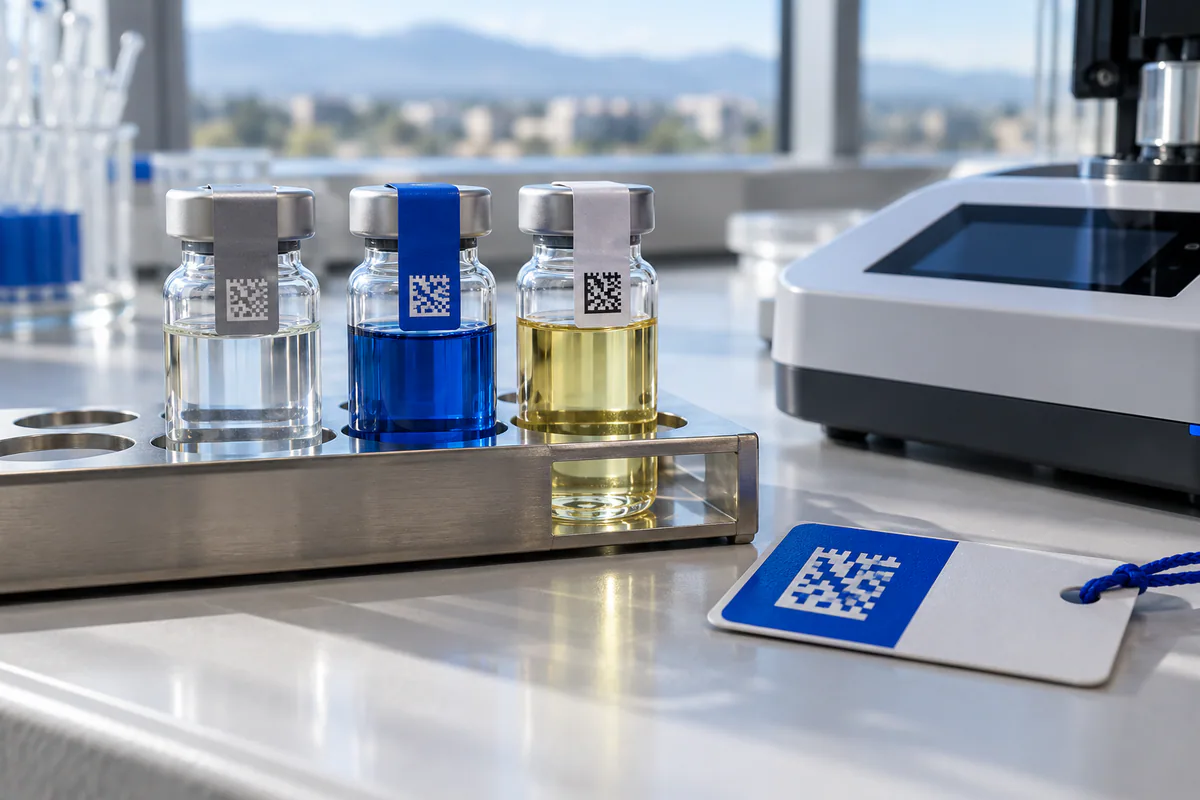
Odoo supports expiration dates, FEFO-based lot selection, and quality checks during shipment. But “do not release the goods without a valid certificate” is not a ready-made rule for the chemical industry. It requires separate automation or a custom module.
When confirming a shipment, the system should check at least five things: whether the selected lot has been approved for release, whether a certificate is attached, whether the certificate matches the product, whether the document covers that exact lot or the relevant serial production, and whether it remains valid on the shipment date. If any condition fails, the operation should remain open and the user should see the exact reason.
The error message should explain how to fix the problem. “Cannot confirm” tells warehouse staff nothing. A useful message would look like this: “LOT-CH-104 was not shipped: the batch certificate is not attached. A review request has been sent to the quality department.”
Once the shipment is confirmed, the documents sent to the customer are compiled from the lots actually shipped. The sales manager does not have to search old folders in Telegram or email for a PDF. If one shipment contains several batches, the system verifies that the correct document is available for each one.
Fertilizer and pesticide manufacturers must also account for another local requirement: digital labeling for all types of fertilizers and pesticides in Uzbekistan will become mandatory from 1 May 2026. Building lot tracking, certificate control, and labeling codes as three separate projects will require expensive integration later. They should be designed from the outset around a single product movement workflow.
Many Odoo demo sessions show an ideal process: an order is created, the product is manufactured, and the shipment is completed. That is not enough for a chemical company. The system must process valid operations quickly while stopping invalid ones at the right point.
For the pilot, choose one product family, several raw materials, and the real laboratory procedure. Then create errors deliberately: try to ship a lot without a certificate, attach an expired document, select a certificate for another product, scan a quarantined batch, and add lots with different documentation to one shipment. In every case, the system must stop the operation and indicate who is responsible for fixing the problem.
The largest hidden cost is not programming. It is bringing legacy data under one consistent set of rules. If a raw material has one name in 1C, a different code in the laboratory’s Excel file, and a trade name on the certificate, automatic matching cannot be trusted. A single standard for product codes, units, and lot formats must be approved before the pilot.
Define the acceptance criteria in advance as well: warehouse staff can scan the lot; production records the raw material batches consumed; the laboratory enters results against the lot; the quality manager approves release; and a shipment cannot be completed with the wrong certificate. If any one of these checks fails, the system is not ready for production use.
Odoo ERP is well suited to companies where discrete or batch manufacturing, warehouse movements, and quality control can be divided into clear operations. If the company uses a continuous chemical process, mixed flows through pipelines, reprocessed waste, or real-time data from laboratory equipment, the standard configuration may not be enough.
In such a company, first determine how material balance, losses, co-products, and batch boundaries are calculated. If the production team cannot say exactly where a batch begins and ends, an ERP will not solve the problem. It will simply move the existing ambiguity onto a screen.
Before choosing Odoo Community or a ready-made module, run technical tests for certificate blocking, laboratory integration, and labeling data exchange. Custom code should not check only whether “a document exists.” It must also validate the document type, lot scope, validity period, and approved version.
Do not implement Odoo yet if lot numbers are not recorded during production, the quality department has not agreed on release criteria, or the warehouse must maintain the old and new systems in parallel. First appoint a process owner and define the data rules. Then run one batch from raw materials to shipment in a small pilot and verify that release without a certificate is blocked in practice.
Celion designs Odoo ERP implementations, lot traceability, quality control, and shipment blocking for chemical and manufacturing companies. The project can begin with a pilot for one product family. During the pilot, we verify that the system works with existing 1C, laboratory, and warehouse data—and that an incorrect lot or certificate stops the shipment.
Callback
Leave your details and we will contact you shortly.
Become a Partner
Leave your contact details and we will get back to you shortly.
Order Service
Leave your phone number and we will contact you shortly.